SOLDES
Jusqu'à -70% sur une sélection d'articles*

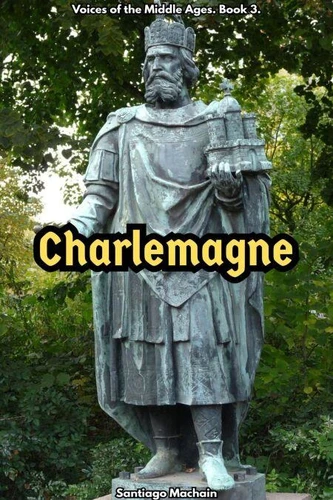
Charlemagne. Voices of the Middle Ages, #3
Par :Formats :
Disponible dans votre compte client Decitre ou Furet du Nord dès validation de votre commande. Le format ePub est :
- Compatible avec une lecture sur My Vivlio (smartphone, tablette, ordinateur)
- Compatible avec une lecture sur liseuses Vivlio
- Pour les liseuses autres que Vivlio, vous devez utiliser le logiciel Adobe Digital Edition. Non compatible avec la lecture sur les liseuses Kindle, Remarkable et Sony
 , qui est-ce ?
Notre partenaire de plateforme de lecture numérique où vous retrouverez l'ensemble de vos ebooks gratuitement
Pour en savoir plus sur nos ebooks, consultez notre aide en ligne ici
C'est si simple ! Lisez votre ebook avec l'app Vivlio sur votre tablette, mobile ou ordinateur :

- FormatePub
- ISBN8233761195
- EAN9798233761195
- Date de parution16/02/2026
- Protection num.pas de protection
- Infos supplémentairesepub
- ÉditeurLinda Balsamo
Résumé
This book offers a historical yet profoundly human biography of Charlemagne, the Frankish king who became emperor and whose figure marks a turning point in the history of Europe. Through its chapters, the reader journeys across the political and religious map of the 8th and 9th centuries, from the fragmented Europe preceding his rise to the construction of a vast Christian Empire. The work portrays the relentless warrior and, at the same time, the reformer who championed laws, reorganized justice, protected the Church, and promoted an authentic cultural renewal: the so-called Carolingian Renaissance.
The life at the court of Aachen, relations with the papacy, campaigns of conquest and conversion, as well as the tensions of old age, the problem of succession, and the decline of the system he had created are all described in detail. The book concludes with an analysis of Charlemagne's long shadow: his transformation into myth and medieval epic hero, the national appropriations of his figure, and the current debate surrounding his legacy-from the construction of the idea of Europe to contemporary critiques of the violence of his reign.
It is a work intended both for readers interested in medieval history and for those seeking to understand the origins of many of the ideas, institutions, and symbols that still define Europe today.
The life at the court of Aachen, relations with the papacy, campaigns of conquest and conversion, as well as the tensions of old age, the problem of succession, and the decline of the system he had created are all described in detail. The book concludes with an analysis of Charlemagne's long shadow: his transformation into myth and medieval epic hero, the national appropriations of his figure, and the current debate surrounding his legacy-from the construction of the idea of Europe to contemporary critiques of the violence of his reign.
It is a work intended both for readers interested in medieval history and for those seeking to understand the origins of many of the ideas, institutions, and symbols that still define Europe today.
A propos de Santiago Machain

6,99 €
6,49 €

6,49 €