SOLDES
Jusqu'à -70% sur une sélection d'articles*

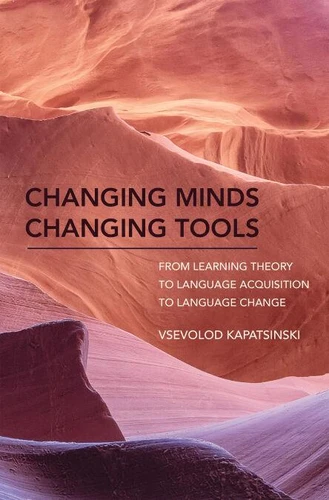
Changing Minds Changing Tools. From Learning Theory to Language Acquisition to Language Change
Par :Formats :
Disponible dans votre compte client Decitre ou Furet du Nord dès validation de votre commande. Le format ePub protégé est :
- Compatible avec une lecture sur My Vivlio (smartphone, tablette, ordinateur)
- Compatible avec une lecture sur liseuses Vivlio
- Pour les liseuses autres que Vivlio, vous devez utiliser le logiciel Adobe Digital Edition. Non compatible avec la lecture sur les liseuses Kindle, Remarkable et Sony
- Non compatible avec un achat hors France métropolitaine
 , qui est-ce ?
Notre partenaire de plateforme de lecture numérique où vous retrouverez l'ensemble de vos ebooks gratuitement
Pour en savoir plus sur nos ebooks, consultez notre aide en ligne ici
C'est si simple ! Lisez votre ebook avec l'app Vivlio sur votre tablette, mobile ou ordinateur :

- Nombre de pages392
- FormatePub
- ISBN978-0-262-34632-0
- EAN9780262346320
- Date de parution31/07/2018
- Protection num.Adobe DRM
- Taille2 Mo
- Infos supplémentairesepub
- ÉditeurThe MIT Press
Résumé
A book that uses domain-general learning theory to explain recurrent trajectories of language change. In this book, Vsevolod Kapatsinski argues that language acquisition-often approached as an isolated domain, subject to its own laws and mechanisms-is simply learning, subject to the same laws as learning in other domains and well described by associative models. Synthesizing research in domain-general learning theory as it relates to language acquisition, Kapatsinski argues that the way minds change as a result of experience can help explain how languages change over time and can predict the likely directions of language change-which in turn predicts what kinds of structures we find in the languages of the world.
What we know about how we learn (the core question of learning theory) can help us understand why languages are the way they are (the core question of theoretical linguistics). Taking a dynamic, usage-based perspective, Kapatsinski focuses on diachronic universals, recurrent pathways of language change, rather than synchronic universals, properties that all languages share. Topics include associative approaches to learning and the neural implementation of the proposed mechanisms; selective attention; units of language; a comparison of associative and Bayesian approaches to learning; representation in the mind of visual and auditory experience; the production of new words and new forms of words; and automatization of repeated action sequences.
This approach brings us closer to understanding why languages are the way they are, Kapatsinski contends, than approaches premised on innate knowledge of language universals and the language acquisition device.
What we know about how we learn (the core question of learning theory) can help us understand why languages are the way they are (the core question of theoretical linguistics). Taking a dynamic, usage-based perspective, Kapatsinski focuses on diachronic universals, recurrent pathways of language change, rather than synchronic universals, properties that all languages share. Topics include associative approaches to learning and the neural implementation of the proposed mechanisms; selective attention; units of language; a comparison of associative and Bayesian approaches to learning; representation in the mind of visual and auditory experience; the production of new words and new forms of words; and automatization of repeated action sequences.
This approach brings us closer to understanding why languages are the way they are, Kapatsinski contends, than approaches premised on innate knowledge of language universals and the language acquisition device.