SOLDES
Jusqu'à -70% sur une sélection d'articles*

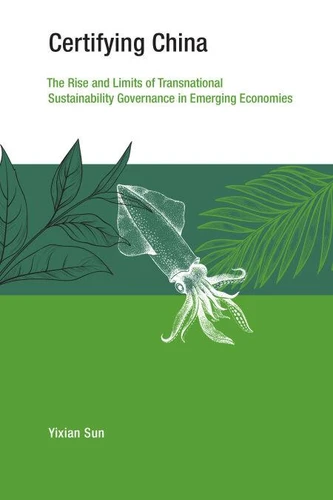
Certifying China. The Rise and Limits of Transnational Sustainability Governance in Emerging Economies
Par :Formats :
Disponible dans votre compte client Decitre ou Furet du Nord dès validation de votre commande. Le format ePub protégé est :
- Compatible avec une lecture sur My Vivlio (smartphone, tablette, ordinateur)
- Compatible avec une lecture sur liseuses Vivlio
- Pour les liseuses autres que Vivlio, vous devez utiliser le logiciel Adobe Digital Edition. Non compatible avec la lecture sur les liseuses Kindle, Remarkable et Sony
- Non compatible avec un achat hors France métropolitaine
 , qui est-ce ?
Notre partenaire de plateforme de lecture numérique où vous retrouverez l'ensemble de vos ebooks gratuitement
Pour en savoir plus sur nos ebooks, consultez notre aide en ligne ici
C'est si simple ! Lisez votre ebook avec l'app Vivlio sur votre tablette, mobile ou ordinateur :

- Nombre de pages276
- FormatePub
- ISBN978-0-262-36960-2
- EAN9780262369602
- Date de parution22/02/2022
- Protection num.Adobe DRM
- Taille16 Mo
- Infos supplémentairesepub
- ÉditeurThe MIT Press
Résumé
A comprehensive study of the growth, potential, and limits of transnational eco-certification in China and the implications for other emerging economies. China has long prioritized economic growth over environmental protection. But in recent years, the country has become a global leader in the fight to save the planet by promoting clean energy, cutting air and water pollution, and developing a system of green finance.
In Certifying China, Yixian Sun explores the potential and limits of transnational eco-certification in moving the world's most populous country toward sustainable consumption and production. He identifies the forces that drive companies from three sectors-seafood, palm oil, and tea-to embrace eco-certification. The success of eco-certification, he says, will depend on the extent to which it wins the support of domestic actors in fast-growing emerging economies. The assumption of eco-certification is that demand along the supply chain can drive businesses to adopt good practices for social, environmental, and economic sustainability by specifying rules for production, third-party verification, and product labeling.
Through case studies drawn from extensive fieldwork and mixed methods, Sun traces the processes by which certification programs originating from the Global North were introduced in China and gradually gained traction. He finds that the rise of eco-certification in the Chinese market is mainly driven by state actors, including government-sponsored industry associations, who seek benefits of transnational governance for their own development goals.
The book challenges the conventional wisdom that the Chinese state has little interest in supporting transnational governance, offering novel insights into the interaction between state and non-state actors in earth system governance in emerging economies.
In Certifying China, Yixian Sun explores the potential and limits of transnational eco-certification in moving the world's most populous country toward sustainable consumption and production. He identifies the forces that drive companies from three sectors-seafood, palm oil, and tea-to embrace eco-certification. The success of eco-certification, he says, will depend on the extent to which it wins the support of domestic actors in fast-growing emerging economies. The assumption of eco-certification is that demand along the supply chain can drive businesses to adopt good practices for social, environmental, and economic sustainability by specifying rules for production, third-party verification, and product labeling.
Through case studies drawn from extensive fieldwork and mixed methods, Sun traces the processes by which certification programs originating from the Global North were introduced in China and gradually gained traction. He finds that the rise of eco-certification in the Chinese market is mainly driven by state actors, including government-sponsored industry associations, who seek benefits of transnational governance for their own development goals.
The book challenges the conventional wisdom that the Chinese state has little interest in supporting transnational governance, offering novel insights into the interaction between state and non-state actors in earth system governance in emerging economies.