
Jill Doerfler (White Earth Anishinaabe) is Assistant Professor of American Indian Studies at the University of Minnesota-Duluth.
Heidi Kiiwetinepinesiik Stark (Turtle Mountain Anishinaabe) is Assistant Professor of Political Science at the University of Victoria.
NIIGAAN SINCLAIR is Anishinaabe from Peguis First Nation and a professor at the University of Manitoba, where he holds the Faculty of Arts Professorship in Indigenous Knowledge and Aesthetics in the Department of Indigenous Studies.
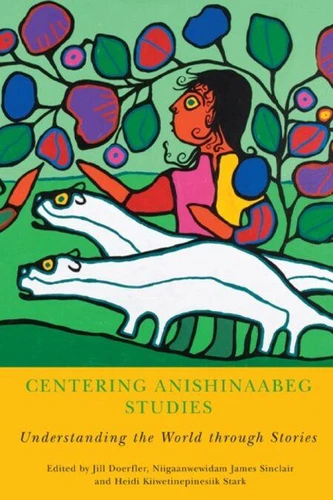
Centering Anishinaabeg Studies. Understanding the World Through Stories
Par : , ,Formats :
Disponible dans votre compte client Decitre ou Furet du Nord dès validation de votre commande. Le format PDF est :
- Compatible avec une lecture sur My Vivlio (smartphone, tablette, ordinateur)
- Compatible avec une lecture sur liseuses Vivlio
- Pour les liseuses autres que Vivlio, vous devez utiliser le logiciel Adobe Digital Edition. Non compatible avec la lecture sur les liseuses Kindle, Remarkable et Sony
 , qui est-ce ?
Notre partenaire de plateforme de lecture numérique où vous retrouverez l'ensemble de vos ebooks gratuitement
Pour en savoir plus sur nos ebooks, consultez notre aide en ligne ici
C'est si simple ! Lisez votre ebook avec l'app Vivlio sur votre tablette, mobile ou ordinateur :

- Nombre de pages449
- FormatPDF
- ISBN978-0-88755-562-6
- EAN9780887555626
- Date de parution01/02/2013
- Protection num.Digital Watermarking
- Taille4 Mo
- Infos supplémentairespdf
- ÉditeurUniversity of Manitoba Press
Résumé
For the Anishinaabeg people, who span a vast geographic region from the Great Lakes to the Plains and beyond, stories are vessels of knowledge. They are bagijiganan, offerings of the possibilities within Anishinaabeg life. Existing along a broad narrative spectrum, from aadizookaanag (traditional or sacred narratives) to dibaajimowinan (histories and news)-as well as everything in between-storytelling is one of the central practices and methods of individual and community existence.
Stories create and understand, survive and endure, revitalize and persist. They honor the past, recognize the present, and provide visions of the future. In remembering, (re)making, and (re)writing stories, Anishinaabeg storytellers have forged a well-traveled path of agency, resistance, and resurgence. Respecting this tradition, this groundbreaking anthology features twenty-four contributors who utilize creative and critical approaches to propose that this people's stories carry dynamic answers to questions posed within Anishinaabeg communities, nations, and the world at large.
Examining a range of stories and storytellers across time and space, each contributor explores how narratives form a cultural, political, and historical foundation for Anishinaabeg Studies. Written by Anishinaabeg and non-Anishinaabeg scholars, storytellers, and activists, these essays draw upon the power of cultural expression to illustrate active and ongoing senses of Anishinaabeg life. They are new and dynamic bagijiganan, revealing a viable and sustainable center for Anishinaabeg Studies, what it has been, what it is, what it can be.
Stories create and understand, survive and endure, revitalize and persist. They honor the past, recognize the present, and provide visions of the future. In remembering, (re)making, and (re)writing stories, Anishinaabeg storytellers have forged a well-traveled path of agency, resistance, and resurgence. Respecting this tradition, this groundbreaking anthology features twenty-four contributors who utilize creative and critical approaches to propose that this people's stories carry dynamic answers to questions posed within Anishinaabeg communities, nations, and the world at large.
Examining a range of stories and storytellers across time and space, each contributor explores how narratives form a cultural, political, and historical foundation for Anishinaabeg Studies. Written by Anishinaabeg and non-Anishinaabeg scholars, storytellers, and activists, these essays draw upon the power of cultural expression to illustrate active and ongoing senses of Anishinaabeg life. They are new and dynamic bagijiganan, revealing a viable and sustainable center for Anishinaabeg Studies, what it has been, what it is, what it can be.