Nouveauté
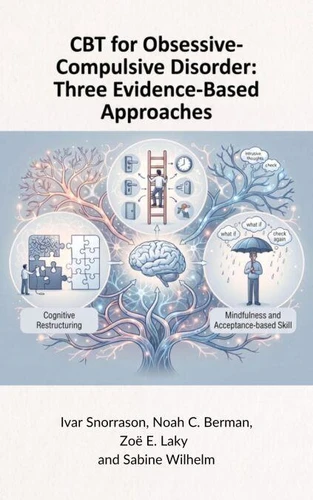
CBT for Obsessive-Compulsive Disorder: Three Evidence-Based Approaches
Par :Formats :
Disponible dans votre compte client Decitre ou Furet du Nord dès validation de votre commande. Le format ePub est :
- Compatible avec une lecture sur My Vivlio (smartphone, tablette, ordinateur)
- Compatible avec une lecture sur liseuses Vivlio
- Pour les liseuses autres que Vivlio, vous devez utiliser le logiciel Adobe Digital Edition. Non compatible avec la lecture sur les liseuses Kindle, Remarkable et Sony
 , qui est-ce ?
Notre partenaire de plateforme de lecture numérique où vous retrouverez l'ensemble de vos ebooks gratuitement
Pour en savoir plus sur nos ebooks, consultez notre aide en ligne ici
C'est si simple ! Lisez votre ebook avec l'app Vivlio sur votre tablette, mobile ou ordinateur :

- FormatePub
- ISBN8233036811
- EAN9798233036811
- Date de parution23/07/2026
- Protection num.pas de protection
- Infos supplémentairesepub
- ÉditeurLinda Balsamo
Résumé
Obsessive-compulsive disorder (OCD) is a debilitating psychiatric condition with a variable clinical presentation. In this chapter, we provide an overview of three empirically supported psychosocial treatments for OCD: cognitive therapy (CT), exposure and response prevention (ERP), and acceptance and commitment therapy (ACT). We first describe symptom presentation and clinical characteristics of OCD and discuss issues related to comorbidity and differential diagnoses.
We also provide a list of useful assessment instruments. We then describe the major therapeutic strategies of the three interventions, discuss similarities and differences between them, and review evidence for their efficacy. We end with an illustrative case example and a discussion of how CT, ERP, and ACT can be used as a "toolkit" that allows therapists to provide comprehensive and flexible clinical care for individuals with OCD.
We also provide a list of useful assessment instruments. We then describe the major therapeutic strategies of the three interventions, discuss similarities and differences between them, and review evidence for their efficacy. We end with an illustrative case example and a discussion of how CT, ERP, and ACT can be used as a "toolkit" that allows therapists to provide comprehensive and flexible clinical care for individuals with OCD.