SOLDES
Jusqu'à -70% sur une sélection d'articles*

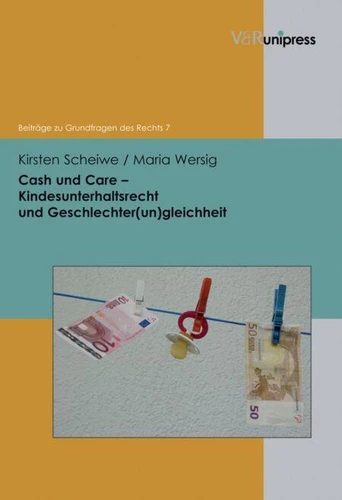
Cash und Care – Kindesunterhaltsrecht und Geschlechter(un)gleichheit
Par : , ,Formats :
Disponible dans votre compte client Decitre ou Furet du Nord dès validation de votre commande. Le format PDF est :
- Compatible avec une lecture sur My Vivlio (smartphone, tablette, ordinateur)
- Compatible avec une lecture sur liseuses Vivlio
- Pour les liseuses autres que Vivlio, vous devez utiliser le logiciel Adobe Digital Edition. Non compatible avec la lecture sur les liseuses Kindle, Remarkable et Sony
 , qui est-ce ?
Notre partenaire de plateforme de lecture numérique où vous retrouverez l'ensemble de vos ebooks gratuitement
Pour en savoir plus sur nos ebooks, consultez notre aide en ligne ici
C'est si simple ! Lisez votre ebook avec l'app Vivlio sur votre tablette, mobile ou ordinateur :

- Nombre de pages127
- FormatPDF
- ISBN978-3-86234-838-1
- EAN9783862348381
- Date de parution20/07/2011
- Protection num.pas de protection
- Taille768 Ko
- Infos supplémentairespdf
- ÉditeurV&R Unipress
Résumé
Child maintenance regulation is a prominent subject of legal debate and social policy. The different contributions to providing for children in cash and care - money, the means of subsistence in kind, education, time and so forth - are unevenly distributed between separated mothers and fathers. The research question is how family law recognises the different contributions and how the provision of unpaid care and time is acknowledged as a contribution on its own.
This question and its gender dimension have been neglected in the debate on family law and child support. The authors discuss the German family law model of an asymmetrical distribution of cash and care for children of separated parents, its gendered role model assumptions, and contested legal question of who has to pay which share of the child costs (contributions for kindergarten, alternating residence of the child, reduction of employment of the child support debtor etc.).
From a legal policy perspective the problem is discussed how to formulate child support rules in a way which does not discriminate against the primary care giver.
This question and its gender dimension have been neglected in the debate on family law and child support. The authors discuss the German family law model of an asymmetrical distribution of cash and care for children of separated parents, its gendered role model assumptions, and contested legal question of who has to pay which share of the child costs (contributions for kindergarten, alternating residence of the child, reduction of employment of the child support debtor etc.).
From a legal policy perspective the problem is discussed how to formulate child support rules in a way which does not discriminate against the primary care giver.