

James Bryron Love was born in southern Ontario in 1957. Since his youth he has pursued art. His art has taken on many forms that include poetry, writing, sculpting, oil painting and music. He was schooled in classic philosophy in Toronto amongst other subjects.
Cascade
Par :Formats :
Disponible dans votre compte client Decitre ou Furet du Nord dès validation de votre commande. Le format ePub est :
- Compatible avec une lecture sur My Vivlio (smartphone, tablette, ordinateur)
- Compatible avec une lecture sur liseuses Vivlio
- Pour les liseuses autres que Vivlio, vous devez utiliser le logiciel Adobe Digital Edition. Non compatible avec la lecture sur les liseuses Kindle, Remarkable et Sony
 , qui est-ce ?
Notre partenaire de plateforme de lecture numérique où vous retrouverez l'ensemble de vos ebooks gratuitement
Pour en savoir plus sur nos ebooks, consultez notre aide en ligne ici
C'est si simple ! Lisez votre ebook avec l'app Vivlio sur votre tablette, mobile ou ordinateur :

- FormatePub
- ISBN8235144378
- EAN9798235144378
- Date de parution19/06/2026
- Protection num.pas de protection
- Infos supplémentairesepub
- ÉditeurIoakim Ioakim
Résumé
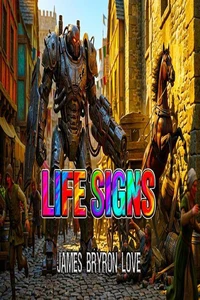
The city above Earth was humanity's greatest achievement - a million souls suspended in orbit, a monument to ambition and the absolute certainty that some people deserved better than the world below. For those who owned it, it was paradise. For the hundreds of thousands who kept its air clean and its power running, its systems alive and its streets lit, it was simply home - the only one they had, earned one shift at a time.
Below, Earth existed for one purpose. To serve. It fed the city above with raw materials and manufactured goods, with food and fuel and replacement parts, with the labor of people who would never set foot in the place their work sustained. Entire cities had been reshaped around the task, their streets laid out for freight rather than living, their populations measured by what they could produce and deliver on schedule.
There was a word for this arrangement in the civic mythology of the age. The word was partnership. Nobody questioned it. The machines ran. The supply ships launched on schedule. The lights above burned bright against the dark, visible from the surface on clear nights as a slow and steady star - the proof of what humanity could achieve, if humanity meant the right people. Then something changed. Not all at once.
Not loudly. A quiet shift deep inside the infrastructure of the world, a crack forming where no one thought to look. By the time anyone noticed, it was already too late to ask the right questions. Some arrangements are more fragile than they appear. Some lights, when they finally go out, take everything with them.
Below, Earth existed for one purpose. To serve. It fed the city above with raw materials and manufactured goods, with food and fuel and replacement parts, with the labor of people who would never set foot in the place their work sustained. Entire cities had been reshaped around the task, their streets laid out for freight rather than living, their populations measured by what they could produce and deliver on schedule.
There was a word for this arrangement in the civic mythology of the age. The word was partnership. Nobody questioned it. The machines ran. The supply ships launched on schedule. The lights above burned bright against the dark, visible from the surface on clear nights as a slow and steady star - the proof of what humanity could achieve, if humanity meant the right people. Then something changed. Not all at once.
Not loudly. A quiet shift deep inside the infrastructure of the world, a crack forming where no one thought to look. By the time anyone noticed, it was already too late to ask the right questions. Some arrangements are more fragile than they appear. Some lights, when they finally go out, take everything with them.
A propos de James Bryron Love
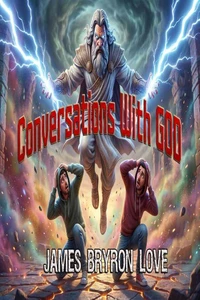
Conversations With God
E-book
2,99 €
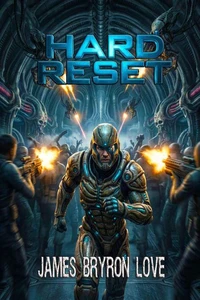
Hard Reset
E-book
2,99 €
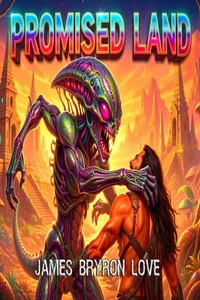
Promised Land
E-book
2,99 €
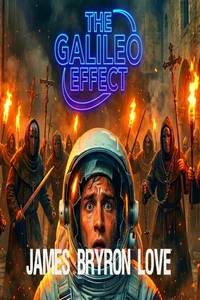
The Galileo Effect
E-book
2,99 €
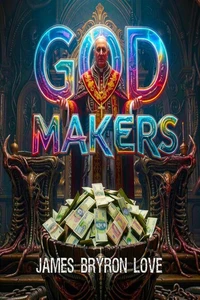
God Makers
E-book
2,99 €
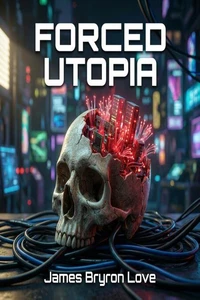
Forced Utopia
E-book
2,99 €
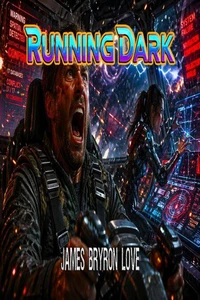
Running Dark
E-book
2,99 €
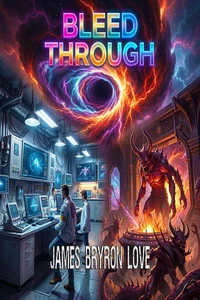
Bleed Through
E-book
2,99 €
Redundancy Error
E-book
2,99 €
Moscovium Rising
E-book
2,99 €
Critical Mass
E-book
2,99 €
Mutiny
E-book
2,99 €
2,99 €
Bad Jobs
E-book
2,99 €
Sovereign Class
E-book
2,99 €

Blood Rights
E-book
2,99 €

2,99 €
Contamination
E-book
2,99 €
Life Signs
E-book
2,99 €