SOLDES
Jusqu'à -70% sur une sélection d'articles*

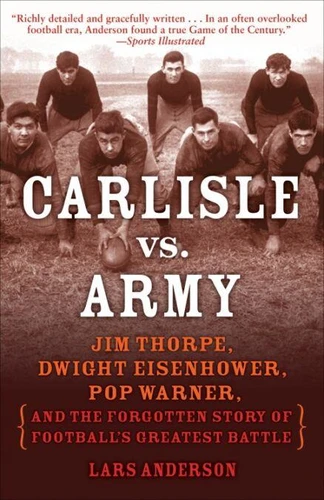
Carlisle vs. Army. Jim Thorpe, Dwight Eisenhower, Pop Warner, and the Forgotten Story of Football's Greatest Battle
Par :Formats :
Disponible dans votre compte client Decitre ou Furet du Nord dès validation de votre commande. Le format ePub protégé est :
- Compatible avec une lecture sur My Vivlio (smartphone, tablette, ordinateur)
- Compatible avec une lecture sur liseuses Vivlio
- Pour les liseuses autres que Vivlio, vous devez utiliser le logiciel Adobe Digital Edition. Non compatible avec la lecture sur les liseuses Kindle, Remarkable et Sony
- Non compatible avec un achat hors France métropolitaine
 , qui est-ce ?
Notre partenaire de plateforme de lecture numérique où vous retrouverez l'ensemble de vos ebooks gratuitement
Pour en savoir plus sur nos ebooks, consultez notre aide en ligne ici
C'est si simple ! Lisez votre ebook avec l'app Vivlio sur votre tablette, mobile ou ordinateur :

- Nombre de pages368
- FormatePub
- ISBN978-1-58836-698-6
- EAN9781588366986
- Date de parution12/08/2008
- Protection num.Adobe DRM
- Taille906 Ko
- Infos supplémentairesepub
- ÉditeurRandom House
Résumé
A stunning work of narrative nonfiction, Carlisle vs. Army recounts the fateful 1912 gridiron clash that pitted one of America's finest athletes, Jim Thorpe, against the man who would become one of the nation's greatest heroes, Dwight D. Eisenhower. But beyond telling the tale of this momentous event, Lars Anderson also reveals the broader social and historical context of the match, lending it his unique perspectives on sports and culture at the dawn of the twentieth century.
This story begins with the infamous massacre of the Sioux at Wounded Knee, in 1890, then moves to rural Pennsylvania and the Carlisle Indian School, an institution designed to "elevate" Indians by uprooting their youths and immersing them in the white man's ways. Foremost among those ways was the burgeoning sport of football. In 1903 came the man who would mold the Carlisle Indians into a juggernaut: Glenn "Pop" Warner, the son of a former Union Army captain.
Guided by Warner, a tireless innovator and skilled manager, the Carlisle eleven barnstormed the country, using superior team speed, disciplined play, and tactical mastery to humiliate such traditional powerhouses as Harvard, Yale, Michigan, and Wisconsin-and to, along the way, lay waste American prejudices against Indians. When a troubled young Sac and Fox Indian from Oklahoma named Jim Thorpe arrived at Carlisle, Warner sensed that he was in the presence of greatness.
While still in his teens, Thorpe dazzled his opponents and gained fans across the nation. In 1912 the coach and the Carlisle team could feel the national championship within their grasp. Among the obstacles in Carlisle's path to dominance were the Cadets of Army, led by a hardnosed Kansan back named Dwight Eisenhower. In Thorpe, Eisenhower saw a legitimate target; knocking the Carlisle great out of the game would bring glory both to the Cadets and to Eisenhower.
The symbolism of this matchup was lost on neither Carlisle's footballers nor on Indians across the country who followed their exploits. Less than a quarter century after Wounded Knee, the Indians would confront, on the playing field, an emblem of the very institution that had slaughtered their ancestors on the field of battle and, in defeating them, possibly regain a measure of lost honor. Filled with colorful period detail and fascinating insights into American history and popular culture, Carlisle vs.
Army gives a thrilling, authoritative account of the events of an epic afternoon whose reverberations would be felt for generations."Carlisle vs. Army is about football the way that The Natural is about baseball."-Jeremy Schaap, author of I
This story begins with the infamous massacre of the Sioux at Wounded Knee, in 1890, then moves to rural Pennsylvania and the Carlisle Indian School, an institution designed to "elevate" Indians by uprooting their youths and immersing them in the white man's ways. Foremost among those ways was the burgeoning sport of football. In 1903 came the man who would mold the Carlisle Indians into a juggernaut: Glenn "Pop" Warner, the son of a former Union Army captain.
Guided by Warner, a tireless innovator and skilled manager, the Carlisle eleven barnstormed the country, using superior team speed, disciplined play, and tactical mastery to humiliate such traditional powerhouses as Harvard, Yale, Michigan, and Wisconsin-and to, along the way, lay waste American prejudices against Indians. When a troubled young Sac and Fox Indian from Oklahoma named Jim Thorpe arrived at Carlisle, Warner sensed that he was in the presence of greatness.
While still in his teens, Thorpe dazzled his opponents and gained fans across the nation. In 1912 the coach and the Carlisle team could feel the national championship within their grasp. Among the obstacles in Carlisle's path to dominance were the Cadets of Army, led by a hardnosed Kansan back named Dwight Eisenhower. In Thorpe, Eisenhower saw a legitimate target; knocking the Carlisle great out of the game would bring glory both to the Cadets and to Eisenhower.
The symbolism of this matchup was lost on neither Carlisle's footballers nor on Indians across the country who followed their exploits. Less than a quarter century after Wounded Knee, the Indians would confront, on the playing field, an emblem of the very institution that had slaughtered their ancestors on the field of battle and, in defeating them, possibly regain a measure of lost honor. Filled with colorful period detail and fascinating insights into American history and popular culture, Carlisle vs.
Army gives a thrilling, authoritative account of the events of an epic afternoon whose reverberations would be felt for generations."Carlisle vs. Army is about football the way that The Natural is about baseball."-Jeremy Schaap, author of I