SOLDES
Jusqu'à -70% sur une sélection d'articles*

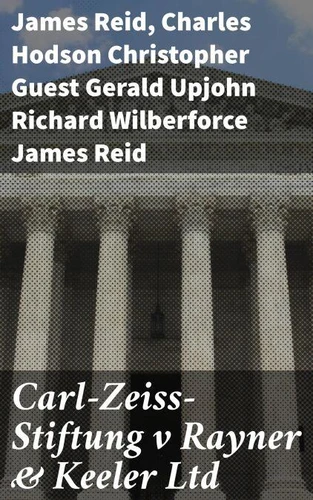
Carl-Zeiss-Stiftung v Rayner & Keeler Ltd. Unraveling Legal and Ethical Dilemmas in Post-War Intellectual Property Rights
Par : ,Formats :
Disponible dans votre compte client Decitre ou Furet du Nord dès validation de votre commande. Le format ePub est :
- Compatible avec une lecture sur My Vivlio (smartphone, tablette, ordinateur)
- Compatible avec une lecture sur liseuses Vivlio
- Pour les liseuses autres que Vivlio, vous devez utiliser le logiciel Adobe Digital Edition. Non compatible avec la lecture sur les liseuses Kindle, Remarkable et Sony
 , qui est-ce ?
Notre partenaire de plateforme de lecture numérique où vous retrouverez l'ensemble de vos ebooks gratuitement
Pour en savoir plus sur nos ebooks, consultez notre aide en ligne ici
C'est si simple ! Lisez votre ebook avec l'app Vivlio sur votre tablette, mobile ou ordinateur :

- Nombre de pages103
- FormatePub
- ISBN406-4-06-643721-3
- EAN4064066437213
- Date de parution08/12/2020
- Protection num.Digital Watermarking
- Taille617 Ko
- Infos supplémentairesepub
- ÉditeurGOOD PRESS
Résumé
In the dynamic collection *Carl-Zeiss-Stiftung v Rayner & Keeler Ltd*, the contributors explore the nuanced realm of jurisprudence through a rich tapestry of narratives and essays. This anthology deftly presents a diverse range of legal analyses and literary articulations that collectively capture the complexity of intellectual property, corporate identity, and the intricate interplay between innovation and ownership rights.
Within these pages, readers will encounter a mosaic of approaches'Äîranging from analytical rigor to creative reinterpretation'Äîthat illuminate the profound impacts of legal battles on global economies and individual livelihoods. Gathering authors like James Reid, Charles Hodson, and Richard Wilberforce, this compilation reflects a convergence of legal expertise and narrative inventiveness, framing the discussions within contemporary legal and historical contexts.
The contributors, with their varied backgrounds in law and literature, offer valuable insights, thereby enriching the fabric of the dialogue on legal precedent and its implications. Their collective works evoke the spirit of legal realism, embracing complexities and uncertainties that echo throughout modern jurisprudential discourse, ultimately showcasing a unified yet multifaceted exploration of its theme.
This volume offers scholars and enthusiasts alike an unparalleled look at the confluence of law and narrative. The anthology's breadth of insights encourages readers to engage deeply with the judicial themes and to appreciate the dialogue fostered between the voices included. By offering a spectrum of learned perspectives, the collection stands as an educational trove, encouraging a rich exploration of how legal thought is both shaped by and shapes the broader societal landscape.
Within these pages, readers will encounter a mosaic of approaches'Äîranging from analytical rigor to creative reinterpretation'Äîthat illuminate the profound impacts of legal battles on global economies and individual livelihoods. Gathering authors like James Reid, Charles Hodson, and Richard Wilberforce, this compilation reflects a convergence of legal expertise and narrative inventiveness, framing the discussions within contemporary legal and historical contexts.
The contributors, with their varied backgrounds in law and literature, offer valuable insights, thereby enriching the fabric of the dialogue on legal precedent and its implications. Their collective works evoke the spirit of legal realism, embracing complexities and uncertainties that echo throughout modern jurisprudential discourse, ultimately showcasing a unified yet multifaceted exploration of its theme.
This volume offers scholars and enthusiasts alike an unparalleled look at the confluence of law and narrative. The anthology's breadth of insights encourages readers to engage deeply with the judicial themes and to appreciate the dialogue fostered between the voices included. By offering a spectrum of learned perspectives, the collection stands as an educational trove, encouraging a rich exploration of how legal thought is both shaped by and shapes the broader societal landscape.