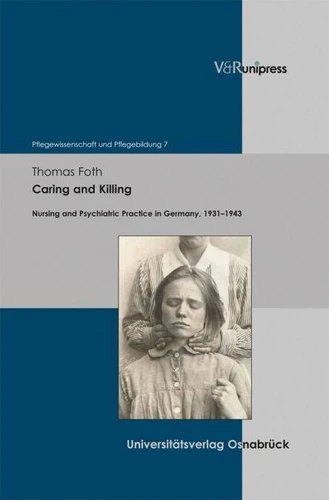
Caring and Killing. Nursing and Psychiatric Practice in Germany, 1931–1943
Par : , ,Formats :
Disponible dans votre compte client Decitre ou Furet du Nord dès validation de votre commande. Le format PDF est :
- Compatible avec une lecture sur My Vivlio (smartphone, tablette, ordinateur)
- Compatible avec une lecture sur liseuses Vivlio
- Pour les liseuses autres que Vivlio, vous devez utiliser le logiciel Adobe Digital Edition. Non compatible avec la lecture sur les liseuses Kindle, Remarkable et Sony
 , qui est-ce ?
Notre partenaire de plateforme de lecture numérique où vous retrouverez l'ensemble de vos ebooks gratuitement
Pour en savoir plus sur nos ebooks, consultez notre aide en ligne ici
C'est si simple ! Lisez votre ebook avec l'app Vivlio sur votre tablette, mobile ou ordinateur :

- Nombre de pages279
- FormatPDF
- ISBN978-3-8470-0062-4
- EAN9783847000624
- Date de parution19/02/2013
- Protection num.pas de protection
- Taille2 Mo
- Infos supplémentairespdf
- ÉditeurV&R Unipress
Résumé
Under the Nazi regime in Germany a calculated killing of chronic "mentally ill" patients took place. Nurses executed this program in their everyday practice. However, suspicions have been raised that psychiatric patients were also assassinated before and after the Nazi regime, suggesting that the motives for these killings must be investigated within psychiatric practice itself. This book highlights the mechanisms and scientific discourses in place that allowed nurses to perceive patients as unworthy of life.
This study analyzes patient records as "inscriptions" that actively intervene in interactions in institutions and that create a specific reality on their own accord. The question is not whether the reality represented within the documents is true, but rather how documents worked in institutions and what their effects were. It is shown how nurses were actively involved in the construction of patients' identities and how these "documentary identities" led to the death of thousands of humans.
This study analyzes patient records as "inscriptions" that actively intervene in interactions in institutions and that create a specific reality on their own accord. The question is not whether the reality represented within the documents is true, but rather how documents worked in institutions and what their effects were. It is shown how nurses were actively involved in the construction of patients' identities and how these "documentary identities" led to the death of thousands of humans.