Nouveauté
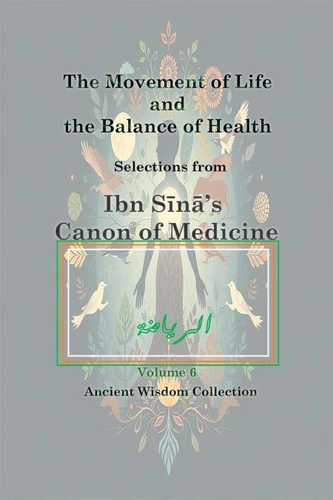
Canon of Medicine: The Movement of Life and the Balance of Health. Ancient Wisdom Collection, #6
Par : , ,Formats :
Disponible dans votre compte client Decitre ou Furet du Nord dès validation de votre commande. Le format ePub est :
- Compatible avec une lecture sur My Vivlio (smartphone, tablette, ordinateur)
- Compatible avec une lecture sur liseuses Vivlio
- Pour les liseuses autres que Vivlio, vous devez utiliser le logiciel Adobe Digital Edition. Non compatible avec la lecture sur les liseuses Kindle, Remarkable et Sony
 , qui est-ce ?
Notre partenaire de plateforme de lecture numérique où vous retrouverez l'ensemble de vos ebooks gratuitement
Pour en savoir plus sur nos ebooks, consultez notre aide en ligne ici
C'est si simple ! Lisez votre ebook avec l'app Vivlio sur votre tablette, mobile ou ordinateur :

- FormatePub
- ISBN8235875333
- EAN9798235875333
- Date de parution06/06/2026
- Protection num.pas de protection
- Infos supplémentairesepub
- ÉditeurIoakim Ioakim
Résumé
This volume presents a curated and thematically organized translation of selected passages on riya?a (exercise) from the Canon of Medicine (al-Qanun fi al-?ibb) of Ibn Sina. Drawing on Books I-IV of the Canon, it brings together both the systematic chapters in which exercise is treated as a central component of regimen, and the numerous dispersed references in which it appears as a governing principle in physiology, pathology, and therapy.
In Ibn Sina's medical thought, exercise is a foundational mechanism of life. It sustains the body's internal balance by promoting transformation, aiding digestion, and preventing the accumulation of harmful residues. Its proper use-defined by moderation, timing, and adaptation to individual condition-extends across all domains of medicine: from the preservation of health and the development of the body, to the treatment of disease and the regulation of daily life.
This volume traces that breadth, showing how a single principle operates across multiple levels of a unified medical system. Ibn Sina (980-1037), known in the Latin tradition as Avicenna, was one of the most influential physicians and philosophers of the medieval world. His Canon of Medicine remained a central medical text in both the Islamic world and Europe for centuries. Combining clinical observation with philosophical rigor, he articulated a comprehensive vision of the human body as a dynamic system governed by processes of balance, transformation, and motion.
By assembling and translating these passages, this volume offers both a focused study of riya?a and an entry point into Ibn Sina's broader medical philosophy-one that continues to invite reflection on the nature of health, the role of movement, and the enduring continuity of knowledge across time and civilizations.
In Ibn Sina's medical thought, exercise is a foundational mechanism of life. It sustains the body's internal balance by promoting transformation, aiding digestion, and preventing the accumulation of harmful residues. Its proper use-defined by moderation, timing, and adaptation to individual condition-extends across all domains of medicine: from the preservation of health and the development of the body, to the treatment of disease and the regulation of daily life.
This volume traces that breadth, showing how a single principle operates across multiple levels of a unified medical system. Ibn Sina (980-1037), known in the Latin tradition as Avicenna, was one of the most influential physicians and philosophers of the medieval world. His Canon of Medicine remained a central medical text in both the Islamic world and Europe for centuries. Combining clinical observation with philosophical rigor, he articulated a comprehensive vision of the human body as a dynamic system governed by processes of balance, transformation, and motion.
By assembling and translating these passages, this volume offers both a focused study of riya?a and an entry point into Ibn Sina's broader medical philosophy-one that continues to invite reflection on the nature of health, the role of movement, and the enduring continuity of knowledge across time and civilizations.