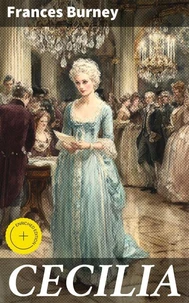
Camilla
Par :Formats :
Disponible dans votre compte client Decitre ou Furet du Nord dès validation de votre commande. Le format ePub est :
- Compatible avec une lecture sur My Vivlio (smartphone, tablette, ordinateur)
- Compatible avec une lecture sur liseuses Vivlio
- Pour les liseuses autres que Vivlio, vous devez utiliser le logiciel Adobe Digital Edition. Non compatible avec la lecture sur les liseuses Kindle, Remarkable et Sony
 , qui est-ce ?
Notre partenaire de plateforme de lecture numérique où vous retrouverez l'ensemble de vos ebooks gratuitement
Pour en savoir plus sur nos ebooks, consultez notre aide en ligne ici
C'est si simple ! Lisez votre ebook avec l'app Vivlio sur votre tablette, mobile ou ordinateur :

- Nombre de pages1280
- FormatePub
- ISBN978-4-9835827-6-0
- EAN9784983582760
- Date de parution08/05/2026
- Protection num.Digital Watermarking
- Taille1 Mo
- Infos supplémentairesepub
- ÉditeurCLXBX
Résumé
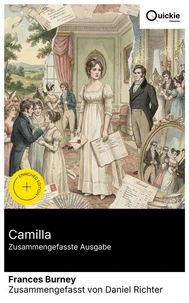
Camilla by Frances Burney is a richly layered novel of manners that explores love, misunderstanding, financial pressure, and social expectation in late 18th-century England. First published in 1796, the novel is a masterful blend of comedy, sentiment, and moral reflection, offering a vivid portrait of society and the challenges faced by individuals navigating its rigid conventions.
The story follows Camilla Tyrold, a young woman of kindness, intelligence, and emotional sensitivity, as she comes of age within a respectable but financially strained family.
As Camilla and those around her enter the world of courtship and social ambition, their lives become entangled in a series of romantic misunderstandings, personal sacrifices, and emotional trials. Central to the narrative is Camilla's relationship with Edgar Mandelbert, a thoughtful and honorable suitor whose affection for her is tested by miscommunication, pride, and external interference. Alongside this central romance, the novel presents a wide cast of characters whose ambitions, eccentricities, and flaws illuminate the complexities of human behavior and social ambition. Frances Burney uses wit and psychological insight to expose the pressures placed on women in a society where reputation, wealth, and appearance often determine personal destiny.
Camilla's journey reflects the tension between sincerity and social expectation, as well as the difficulty of maintaining integrity in a world governed by judgment and misunderstanding. The novel is also notable for its intricate plotting and its exploration of moral growth through suffering. Burney balances humor with emotional depth, creating moments of both satire and genuine pathos. Through its detailed depiction of family life, courtship rituals, and financial anxiety, Camilla offers a compelling critique of social structures and human vanity. As one of Burney's most ambitious works, Camilla played an important role in the development of the English novel, influencing later writers who focused on domestic life and psychological realism. Ideal for readers of classic fiction, romantic literature, and historical social novels, Camilla remains a captivating exploration of love, identity, and the often painful path toward personal maturity.
As Camilla and those around her enter the world of courtship and social ambition, their lives become entangled in a series of romantic misunderstandings, personal sacrifices, and emotional trials. Central to the narrative is Camilla's relationship with Edgar Mandelbert, a thoughtful and honorable suitor whose affection for her is tested by miscommunication, pride, and external interference. Alongside this central romance, the novel presents a wide cast of characters whose ambitions, eccentricities, and flaws illuminate the complexities of human behavior and social ambition. Frances Burney uses wit and psychological insight to expose the pressures placed on women in a society where reputation, wealth, and appearance often determine personal destiny.
Camilla's journey reflects the tension between sincerity and social expectation, as well as the difficulty of maintaining integrity in a world governed by judgment and misunderstanding. The novel is also notable for its intricate plotting and its exploration of moral growth through suffering. Burney balances humor with emotional depth, creating moments of both satire and genuine pathos. Through its detailed depiction of family life, courtship rituals, and financial anxiety, Camilla offers a compelling critique of social structures and human vanity. As one of Burney's most ambitious works, Camilla played an important role in the development of the English novel, influencing later writers who focused on domestic life and psychological realism. Ideal for readers of classic fiction, romantic literature, and historical social novels, Camilla remains a captivating exploration of love, identity, and the often painful path toward personal maturity.