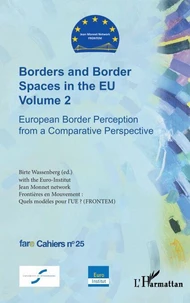
How to manage borders in European border regions before and after the COVID-19 pandemic? This Cahier Fare n°24 presents the results of the Jean Monnet Network "Frontières en mouvement: quels modèles pour l'UE (FRONTEM)?", which was supported by the EU's Erasmus+ program for the period between 2019-2023. The network exchanged knowledge and practices on five different models of EU border management: the border between France and Germany, the border between France and Belgium, the border between Ireland and Northern Ireland, the border between Rumania and Hungary and the border between Denmark and Germany.
By analysing the results of research seminars and focus groups organised in each of the 5 border regions concerned, it critically examines best practice management models of cross-border integration, of minority management and of peace facilitation. The key question addressed by the network was to assess the role of the border in the process of European integration when faced with processes of re-bordering and the re-questioning of the model of a "Europe without borders".
How to manage borders in European border regions before and after the COVID-19 pandemic? This Cahier Fare n°24 presents the results of the Jean Monnet Network "Frontières en mouvement: quels modèles pour l'UE (FRONTEM)?", which was supported by the EU's Erasmus+ program for the period between 2019-2023. The network exchanged knowledge and practices on five different models of EU border management: the border between France and Germany, the border between France and Belgium, the border between Ireland and Northern Ireland, the border between Rumania and Hungary and the border between Denmark and Germany.
By analysing the results of research seminars and focus groups organised in each of the 5 border regions concerned, it critically examines best practice management models of cross-border integration, of minority management and of peace facilitation. The key question addressed by the network was to assess the role of the border in the process of European integration when faced with processes of re-bordering and the re-questioning of the model of a "Europe without borders".

 , qui est-ce ?