SOLDES
Jusqu'à -70% sur une sélection d'articles*

Nouveauté
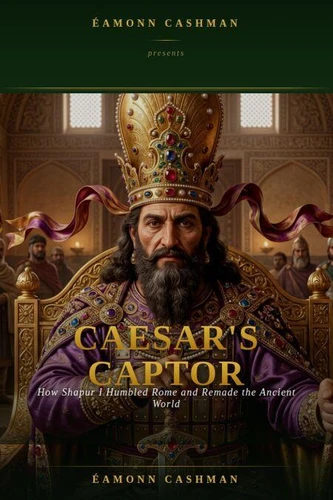
Caesar's Captor: How Shapur I Humbled Rome and Remade the Ancient World
Par :Formats :
Disponible dans votre compte client Decitre ou Furet du Nord dès validation de votre commande. Le format ePub est :
- Compatible avec une lecture sur My Vivlio (smartphone, tablette, ordinateur)
- Compatible avec une lecture sur liseuses Vivlio
- Pour les liseuses autres que Vivlio, vous devez utiliser le logiciel Adobe Digital Edition. Non compatible avec la lecture sur les liseuses Kindle, Remarkable et Sony
 , qui est-ce ?
Notre partenaire de plateforme de lecture numérique où vous retrouverez l'ensemble de vos ebooks gratuitement
Pour en savoir plus sur nos ebooks, consultez notre aide en ligne ici
C'est si simple ! Lisez votre ebook avec l'app Vivlio sur votre tablette, mobile ou ordinateur :

- FormatePub
- ISBN8235310070
- EAN9798235310070
- Date de parution14/06/2026
- Protection num.pas de protection
- Infos supplémentairesepub
- ÉditeurIoakim Ioakim
Résumé
Caesar's Captor: How Shapur I Humbled Rome and Remade the Ancient World In 260 CE, a Persian king did something no enemy of Rome had ever done: he captured a living Roman emperor and held him for the rest of his life. The man who accomplished this was Shapur I, King of Kings of the Sasanian Empire, and the capture of Valerian was only the most spectacular event in a reign that fundamentally remade the ancient world.
This book tells his story in full. Shapur I defeated three Roman emperors, built cities with Roman architects and captive Roman engineers, carved his victories into the limestone cliffs of Iran in three languages, and protected a universal prophet against the pressure of his own clergy. He transformed the agricultural economy of the Persian Gulf plain, created the intellectual conditions that would eventually transmit Greek science to the Islamic world, and governed a multi-ethnic empire stretching from the Euphrates to the Indus with a sophistication that the Roman tradition was never quite willing to acknowledge.
Drawing on inscriptions, rock reliefs, archaeology, and the full range of ancient sources, this narrative history reconstructs the reign of one of antiquity's most consequential rulers, and asks what the world he made still means to us.
This book tells his story in full. Shapur I defeated three Roman emperors, built cities with Roman architects and captive Roman engineers, carved his victories into the limestone cliffs of Iran in three languages, and protected a universal prophet against the pressure of his own clergy. He transformed the agricultural economy of the Persian Gulf plain, created the intellectual conditions that would eventually transmit Greek science to the Islamic world, and governed a multi-ethnic empire stretching from the Euphrates to the Indus with a sophistication that the Roman tradition was never quite willing to acknowledge.
Drawing on inscriptions, rock reliefs, archaeology, and the full range of ancient sources, this narrative history reconstructs the reign of one of antiquity's most consequential rulers, and asks what the world he made still means to us.