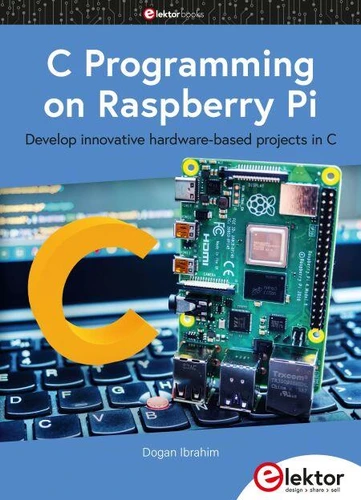
C Programming on Raspberry Pi. Develop innovative hardware-based projects in C
Par :Formats :
Disponible dans votre compte client Decitre ou Furet du Nord dès validation de votre commande. Le format PDF est :
- Compatible avec une lecture sur My Vivlio (smartphone, tablette, ordinateur)
- Compatible avec une lecture sur liseuses Vivlio
- Pour les liseuses autres que Vivlio, vous devez utiliser le logiciel Adobe Digital Edition. Non compatible avec la lecture sur les liseuses Kindle, Remarkable et Sony
 , qui est-ce ?
Notre partenaire de plateforme de lecture numérique où vous retrouverez l'ensemble de vos ebooks gratuitement
Pour en savoir plus sur nos ebooks, consultez notre aide en ligne ici
C'est si simple ! Lisez votre ebook avec l'app Vivlio sur votre tablette, mobile ou ordinateur :

- Nombre de pages376
- FormatPDF
- ISBN978-3-89576-432-5
- EAN9783895764325
- Date de parution07/04/2021
- Protection num.Digital Watermarking
- Taille45 Mo
- Infos supplémentairespdf
- ÉditeurElektor
Résumé
The Raspberry Pi has traditionally been programmed using Python. Although this is a very powerful language, many programmers may not be familiar with it. C on the other hand is perhaps the most commonly used programming language and all embedded microcontrollers can be programmed using it.
The C language is taught in most technical colleges and universities and almost all engineering students are familiar with using it with their projects.
This book is about using the Raspberry Pi with C to develop a range of hardware-based projects. Two of the most popular C libraries, wiringPi and pigpio are used. The book starts with an introduction to C and most students and newcomers will find this chapter invaluable. Many projects are provided in the book, including using Wi-Fi and Bluetooth to establish communication with smartphones. Many sensor and hardware-based projects are included.
Both wiringPi and pigpio libraries are used in all projects. Complete program listings are given with full explanations. All projects have been fully tested and work. The following hardware-based projects are provided in the book: > Using sensors > Using LCDs > I 2 C and SPI buses > Serial communication > Multitasking > External and timer interrupts > Using Wi-Fi > Webservers > Communicating with smartphones > Using Bluetooth > Sending data to the cloud Program listings of all Raspberry Pi projects developed in this book are available on the Elektor website.
Readers can download and use these programs in their projects. Alternatively, they can customize them to suit their applications.
This book is about using the Raspberry Pi with C to develop a range of hardware-based projects. Two of the most popular C libraries, wiringPi and pigpio are used. The book starts with an introduction to C and most students and newcomers will find this chapter invaluable. Many projects are provided in the book, including using Wi-Fi and Bluetooth to establish communication with smartphones. Many sensor and hardware-based projects are included.
Both wiringPi and pigpio libraries are used in all projects. Complete program listings are given with full explanations. All projects have been fully tested and work. The following hardware-based projects are provided in the book: > Using sensors > Using LCDs > I 2 C and SPI buses > Serial communication > Multitasking > External and timer interrupts > Using Wi-Fi > Webservers > Communicating with smartphones > Using Bluetooth > Sending data to the cloud Program listings of all Raspberry Pi projects developed in this book are available on the Elektor website.
Readers can download and use these programs in their projects. Alternatively, they can customize them to suit their applications.
A propos de Dogan Ibrahim
29,99 €