SOLDES
Jusqu'à -70% sur une sélection d'articles*

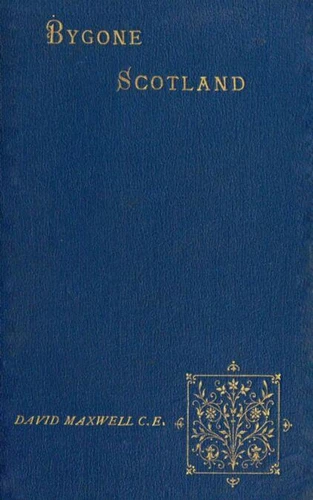
Bygone Scotland - Historical and Social
Par :Formats :
Disponible dans votre compte client Decitre ou Furet du Nord dès validation de votre commande. Le format ePub est :
- Compatible avec une lecture sur My Vivlio (smartphone, tablette, ordinateur)
- Compatible avec une lecture sur liseuses Vivlio
- Pour les liseuses autres que Vivlio, vous devez utiliser le logiciel Adobe Digital Edition. Non compatible avec la lecture sur les liseuses Kindle, Remarkable et Sony
 , qui est-ce ?
Notre partenaire de plateforme de lecture numérique où vous retrouverez l'ensemble de vos ebooks gratuitement
Pour en savoir plus sur nos ebooks, consultez notre aide en ligne ici
C'est si simple ! Lisez votre ebook avec l'app Vivlio sur votre tablette, mobile ou ordinateur :

- Nombre de pages430
- FormatePub
- ISBN978-3-7364-1884-4
- EAN9783736418844
- Date de parution18/06/2017
- Protection num.Digital Watermarking
- Taille2 Mo
- Infos supplémentairesepub
- ÉditeurAndhof
Résumé
For a country of comparatively small extent, and with a large proportion of its soil in moor and mountain, histories of Scotland have been numerous and well-nigh exhaustive. The present work is not a chronicle of events in order and detail, but a series of pictures from the earlier history, expanding into fuller narratives of the more striking events in later times. And it includes portions of contemporaneous English history; for the history of Scotland can only be fully understood through that of its larger and more powerful neighbour.
The growth of a people out of semi-barbarism and tribal diversity, to civilization and national autonomy, is ever an interesting study.
This growth in Scotland included many elements. The Roman occupation of Southern Britain banded together for defence and aggression the northern tribes. For centuries after the Roman evacuation the old British race held the south-western shires, up to the Clyde; the Anglo-Saxon kingdom of Northumbria extended to the Frith of Forth; there were Norse settlements on the eastern coast, in Orkney, and the Hebrides.
Of the various races out of which the Scottish nation was formed, the Picts were the most numerous; but the Scots-a kindred race, wanderers from Ireland-were the more active and aggressive-came to assume the general government, and gave their name to the whole country north of the Solway and the Tweed. It is interesting to trace how, in unsettled times, the burghs developed into little, distinct communities, largely self-governed.
And the religious element in Scotland has been a powerful factor in shaping the character of the people and of the national institutions; the conflict of the Covenant was the epic in Scottish history. The rebellion of 1745, as the last specially Scottish incident in British history, is properly the closing chapter in Bygone Scotland. D. M. Hull Literary Club, St. Andrew's Day, 1893.
This growth in Scotland included many elements. The Roman occupation of Southern Britain banded together for defence and aggression the northern tribes. For centuries after the Roman evacuation the old British race held the south-western shires, up to the Clyde; the Anglo-Saxon kingdom of Northumbria extended to the Frith of Forth; there were Norse settlements on the eastern coast, in Orkney, and the Hebrides.
Of the various races out of which the Scottish nation was formed, the Picts were the most numerous; but the Scots-a kindred race, wanderers from Ireland-were the more active and aggressive-came to assume the general government, and gave their name to the whole country north of the Solway and the Tweed. It is interesting to trace how, in unsettled times, the burghs developed into little, distinct communities, largely self-governed.
And the religious element in Scotland has been a powerful factor in shaping the character of the people and of the national institutions; the conflict of the Covenant was the epic in Scottish history. The rebellion of 1745, as the last specially Scottish incident in British history, is properly the closing chapter in Bygone Scotland. D. M. Hull Literary Club, St. Andrew's Day, 1893.