SOLDES
Jusqu'à -70% sur une sélection d'articles*

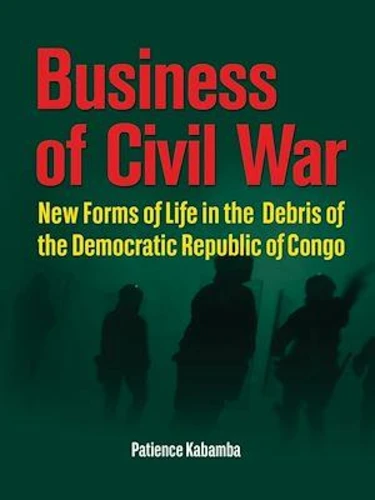
Business of civil war. New forms of life in the debris of the Democratic Republic of Congo
Par :Formats :
Disponible dans votre compte client Decitre ou Furet du Nord dès validation de votre commande. Le format ePub est :
- Compatible avec une lecture sur My Vivlio (smartphone, tablette, ordinateur)
- Compatible avec une lecture sur liseuses Vivlio
- Pour les liseuses autres que Vivlio, vous devez utiliser le logiciel Adobe Digital Edition. Non compatible avec la lecture sur les liseuses Kindle, Remarkable et Sony
 , qui est-ce ?
Notre partenaire de plateforme de lecture numérique où vous retrouverez l'ensemble de vos ebooks gratuitement
Pour en savoir plus sur nos ebooks, consultez notre aide en ligne ici
C'est si simple ! Lisez votre ebook avec l'app Vivlio sur votre tablette, mobile ou ordinateur :

- Nombre de pages693
- FormatePub
- ISBN978-2-38234-026-4
- EAN9782382340264
- Date de parution30/06/2021
- Protection num.Digital Watermarking
- Taille717 Ko
- Infos supplémentairesepub
- ÉditeurCoédition NENA/CODESRIA
Résumé
Within the context of the absence of effective state sovereignty and the presence of numerous armed struggles for power, Nande traders have managed to build and protect self-sustaining, prosperous, transnational economic enterprises in eastern Congo. This book discusses the commercial enterprises of the Nande trust networks and the subsequent transnational community they have produced, thereby challenging the assumption that a « weak state » or a « ailed state » or even a « collapsed state » can be presumed to signal a « failed » society.
It demonstrates the fact that several sovereignties and property right systems can coexist side by side, reinforcing each other - an idea which seems inconceivable for those with a normative view of governmental institutions and state sovereignty. Rethinking the question of African state formation, the study contributes to the formulation of a more rigorously transnational and local paradigms in the study of post-colonial African state formations.
It constitutes an original contribution to critical theory of societal responses to processes of state implosion, and the anthropology of new social formations that emerge when states disintegrate, especially in war-torn Africa. The book also discusses issues related to the dynamics of conflict, new state formation, transnational trade network, ethnicity, and global political and economic governance.
In the midst of abundant anti-ethnic literature on African studies, this study posits that there may be a renewed usefulness and necessity in theorizing the salience and continuing production of « ethnic » differences in a manner that challenges the notion of ethnicity as merely a devious and divisive invention of colonialism that must simply be overcome.
It demonstrates the fact that several sovereignties and property right systems can coexist side by side, reinforcing each other - an idea which seems inconceivable for those with a normative view of governmental institutions and state sovereignty. Rethinking the question of African state formation, the study contributes to the formulation of a more rigorously transnational and local paradigms in the study of post-colonial African state formations.
It constitutes an original contribution to critical theory of societal responses to processes of state implosion, and the anthropology of new social formations that emerge when states disintegrate, especially in war-torn Africa. The book also discusses issues related to the dynamics of conflict, new state formation, transnational trade network, ethnicity, and global political and economic governance.
In the midst of abundant anti-ethnic literature on African studies, this study posits that there may be a renewed usefulness and necessity in theorizing the salience and continuing production of « ethnic » differences in a manner that challenges the notion of ethnicity as merely a devious and divisive invention of colonialism that must simply be overcome.