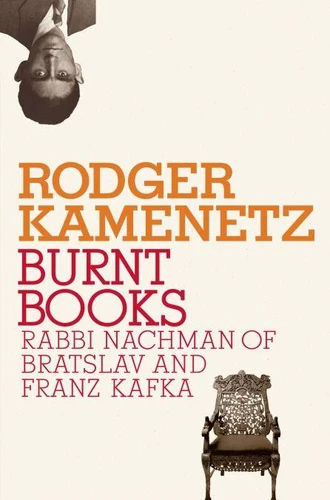
Burnt Books. Rabbi Nachman of Bratslav and Franz Kafka
Par :Formats :
Disponible dans votre compte client Decitre ou Furet du Nord dès validation de votre commande. Le format ePub protégé est :
- Compatible avec une lecture sur My Vivlio (smartphone, tablette, ordinateur)
- Compatible avec une lecture sur liseuses Vivlio
- Pour les liseuses autres que Vivlio, vous devez utiliser le logiciel Adobe Digital Edition. Non compatible avec la lecture sur les liseuses Kindle, Remarkable et Sony
- Non compatible avec un achat hors France métropolitaine
 , qui est-ce ?
Notre partenaire de plateforme de lecture numérique où vous retrouverez l'ensemble de vos ebooks gratuitement
Pour en savoir plus sur nos ebooks, consultez notre aide en ligne ici
C'est si simple ! Lisez votre ebook avec l'app Vivlio sur votre tablette, mobile ou ordinateur :

- Nombre de pages368
- FormatePub
- ISBN978-0-307-37933-7
- EAN9780307379337
- Date de parution19/10/2010
- Protection num.Adobe DRM
- Taille2 Mo
- Infos supplémentairesepub
- ÉditeurSchocken
Résumé
From the acclaimed author of The Jew in the Lotus comes an "engrossing and wonderful book" (The Washington Times) about the unexpected connections between Franz Kafka and Hasidic master Rabbi Nachman of Bratslav-and the significant role played by the imagination in the Jewish spiritual experience. Rodger Kamenetz has long been fascinated by the mystical tales of the Hasidic master Rabbi Nachman of Bratslav.
And for many years he has taught a course in Prague on Franz Kafka. The more he thought about their lives and writings, the more aware he became of unexpected connections between them. Kafka was a secular artist fascinated by Jewish mysticism, and Rabbi Nachman was a religious mystic who used storytelling to reach out to secular Jews. Both men died close to age forty of tuberculosis. Both invented new forms of storytelling that explore the search for meaning in an illogical, unjust world.
Both gained prominence with the posthumous publication of their writing. And both left strict instructions at the end of their lives that their unpublished books be burnt. Kamenetz takes his ideas on the road, traveling to Kafka's birthplace in Prague and participating in the pilgrimage to Uman, the burial site of Rabbi Nachman visited by thousands of Jews every Jewish new year. He discusses the hallucinatory intensity of their visions and offers a rich analysis of Nachman's and Kafka's major works, revealing uncanny similarities in the inner lives of these two troubled and beloved figures, whose creative and religious struggles have much to teach us about the Jewish spiritual experience.
And for many years he has taught a course in Prague on Franz Kafka. The more he thought about their lives and writings, the more aware he became of unexpected connections between them. Kafka was a secular artist fascinated by Jewish mysticism, and Rabbi Nachman was a religious mystic who used storytelling to reach out to secular Jews. Both men died close to age forty of tuberculosis. Both invented new forms of storytelling that explore the search for meaning in an illogical, unjust world.
Both gained prominence with the posthumous publication of their writing. And both left strict instructions at the end of their lives that their unpublished books be burnt. Kamenetz takes his ideas on the road, traveling to Kafka's birthplace in Prague and participating in the pilgrimage to Uman, the burial site of Rabbi Nachman visited by thousands of Jews every Jewish new year. He discusses the hallucinatory intensity of their visions and offers a rich analysis of Nachman's and Kafka's major works, revealing uncanny similarities in the inner lives of these two troubled and beloved figures, whose creative and religious struggles have much to teach us about the Jewish spiritual experience.