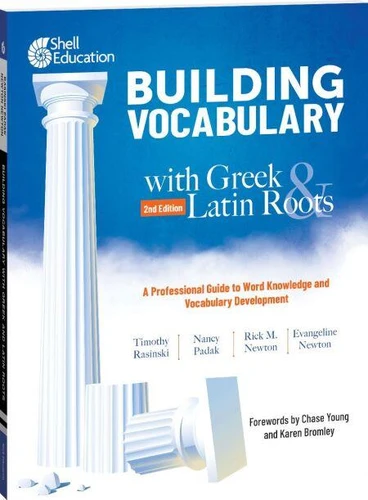
Building Vocabulary with Greek and Latin Roots. A Professional Guide to Word Knowledge and Vocabulary Development
Par : , , , ,Formats :
Disponible dans votre compte client Decitre ou Furet du Nord dès validation de votre commande. Le format PDF est :
- Compatible avec une lecture sur My Vivlio (smartphone, tablette, ordinateur)
- Compatible avec une lecture sur liseuses Vivlio
- Pour les liseuses autres que Vivlio, vous devez utiliser le logiciel Adobe Digital Edition. Non compatible avec la lecture sur les liseuses Kindle, Remarkable et Sony
 , qui est-ce ?
Notre partenaire de plateforme de lecture numérique où vous retrouverez l'ensemble de vos ebooks gratuitement
Pour en savoir plus sur nos ebooks, consultez notre aide en ligne ici
C'est si simple ! Lisez votre ebook avec l'app Vivlio sur votre tablette, mobile ou ordinateur :

- Nombre de pages192
- FormatPDF
- ISBN978-0-7439-1644-8
- EAN9780743916448
- Date de parution03/01/2020
- Protection num.Digital Watermarking
- Taille20 Mo
- Infos supplémentairespdf
- ÉditeurShell Education
Résumé
Did you know that Greek and Latin roots make up 90% of English words of two or more syllables? Having an extensive vocabulary is key to students' reading comprehension. By adopting the strategies in this book, teachers will help their students read more effectively, setting a foundation for lifelong learning and reading success. This teacher-friendly resource written by Timothy Rasinski, Nancy Padak, Rick M.
Newton, and Evangeline Newton provides the latest research on how to teach Greek and Latin roots. It includes anecdotes from teachers who have adopted these strategies and how they play out in today's classrooms. With a research-based rationale for addressing vocabulary in the classroom, this K-12 resource is full of strategies for increasing reading comprehension, instructional planning, and building a word-rich learning environment to support all students including English language learners.
Newton, and Evangeline Newton provides the latest research on how to teach Greek and Latin roots. It includes anecdotes from teachers who have adopted these strategies and how they play out in today's classrooms. With a research-based rationale for addressing vocabulary in the classroom, this K-12 resource is full of strategies for increasing reading comprehension, instructional planning, and building a word-rich learning environment to support all students including English language learners.
A propos de Timothy Rasinski

23,99 €

23,99 €
23,99 €
23,99 €
23,99 €