
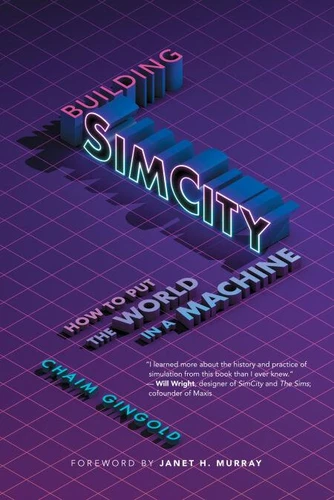
Building SimCity. How to Put the World in a Machine
Par : ,Formats :
Disponible dans votre compte client Decitre ou Furet du Nord dès validation de votre commande. Le format ePub protégé est :
- Compatible avec une lecture sur My Vivlio (smartphone, tablette, ordinateur)
- Compatible avec une lecture sur liseuses Vivlio
- Pour les liseuses autres que Vivlio, vous devez utiliser le logiciel Adobe Digital Edition. Non compatible avec la lecture sur les liseuses Kindle, Remarkable et Sony
- Non compatible avec un achat hors France métropolitaine
 , qui est-ce ?
Notre partenaire de plateforme de lecture numérique où vous retrouverez l'ensemble de vos ebooks gratuitement
Pour en savoir plus sur nos ebooks, consultez notre aide en ligne ici
C'est si simple ! Lisez votre ebook avec l'app Vivlio sur votre tablette, mobile ou ordinateur :

- Nombre de pages486
- FormatePub
- ISBN978-0-262-37758-4
- EAN9780262377584
- Date de parution04/06/2024
- Protection num.Adobe DRM
- Taille7 Mo
- Infos supplémentairesepub
- ÉditeurThe MIT Press
Résumé
A deep dive into the trailblazing simulation game SimCity, situating it in the history of games, simulation, and computing. Building SimCity explores the history of computer simulation by chronicling one of the most influential simulation games ever made: SimCity. As author Chaim Gingold explains, Will Wright, the visionary designer behind the urban planning game, created SimCity in part to learn about cities, appropriating ideas from traditions in which computers are used as tools for modeling and thinking about the world as a complex system.
As such, SimCity is a microcosm of the histories and cultures of computer simulation that engages with questions, themes, and representational techniques that reach back to the earliest computer simulations. Gingold uses SimCity to explore a web of interrelated topics in the history of technology, software, and simulation, taking us far and wide-from the dawn of programmable computers to miniature cities made of construction paper and role-play.
An unprecedented history of Maxis, the company founded to bring SimCity to market, the book reveals Maxis's complex relations with venture capitalists, Nintendo, and the Santa Fe Institute, which shaped the evolution of Will Wright's career; Maxis's failure to back The Sims to completion; and the company's sale to Electronic Arts. A lavishly visual book, Building SimCity boasts a treasure trove of visual matter to help bring its wide-ranging subjects to life, including painstakingly crafted diagrams that explain SimCity's operation, the Kodachrome photographs taken by Charles Eames of schoolchildren making model cities, and Nintendo's manga-style "Dr.
Wright" character design, just to name a few.
As such, SimCity is a microcosm of the histories and cultures of computer simulation that engages with questions, themes, and representational techniques that reach back to the earliest computer simulations. Gingold uses SimCity to explore a web of interrelated topics in the history of technology, software, and simulation, taking us far and wide-from the dawn of programmable computers to miniature cities made of construction paper and role-play.
An unprecedented history of Maxis, the company founded to bring SimCity to market, the book reveals Maxis's complex relations with venture capitalists, Nintendo, and the Santa Fe Institute, which shaped the evolution of Will Wright's career; Maxis's failure to back The Sims to completion; and the company's sale to Electronic Arts. A lavishly visual book, Building SimCity boasts a treasure trove of visual matter to help bring its wide-ranging subjects to life, including painstakingly crafted diagrams that explain SimCity's operation, the Kodachrome photographs taken by Charles Eames of schoolchildren making model cities, and Nintendo's manga-style "Dr.
Wright" character design, just to name a few.