OFFRE LISEUSES
Une liseuse achetée = une housse offerte* jusqu'au 21 juin

Nouveauté
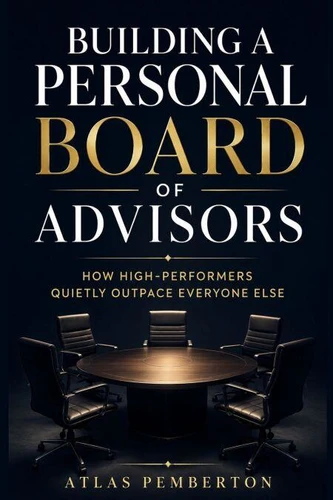
Building a Personal Board of Advisors. How High-Performers Quietly Outpace Everyone Else
Par :Formats :
Disponible dans votre compte client Decitre ou Furet du Nord dès validation de votre commande. Le format ePub est :
- Compatible avec une lecture sur My Vivlio (smartphone, tablette, ordinateur)
- Compatible avec une lecture sur liseuses Vivlio
- Pour les liseuses autres que Vivlio, vous devez utiliser le logiciel Adobe Digital Edition. Non compatible avec la lecture sur les liseuses Kindle, Remarkable et Sony
 , qui est-ce ?
Notre partenaire de plateforme de lecture numérique où vous retrouverez l'ensemble de vos ebooks gratuitement
Pour en savoir plus sur nos ebooks, consultez notre aide en ligne ici
C'est si simple ! Lisez votre ebook avec l'app Vivlio sur votre tablette, mobile ou ordinateur :

- FormatePub
- ISBN8905168802
- EAN9798905168802
- Date de parution04/06/2026
- Protection num.pas de protection
- Taille614 Ko
- Infos supplémentairesepub
- ÉditeurChiify
Résumé
Build your personal board of advisors: the career mentorship alternative that high-performers use to outpace peers, make better decisions, and compound professional growth across decades.
There is a particular kind of professional who moves through their career with a steadiness others find unnerving. They are not the loudest in the meeting. They do not show up on the conference circuit. And yet, over ten or fifteen years, they end up exactly where they wanted to be -- often a few steps further along than those who appeared more obviously ambitious.
Underneath their trajectory, almost always, sits a small room of reliable voices: four to six people chosen on purpose, each covering a distinct angle of view on their work and life. This book is about how to build that room deliberately. Executive coach Atlas Pemberton -- twenty years advising senior professionals across finance, technology, healthcare, and government -- argues that the single-mentor model is the wrong unit.
One wise person cannot cover the speed of change in modern fields, the diversity of career paths, or the full breadth of what professional life now asks you to manage. The personal board of advisors replaces the mentor myth with a precise, sustainable architecture: a boss-level advisor who has stood where you want to stand; a peer-level advisor running the same race; a cross-industry advisor with genuinely fresh eyes; an older-and-wiser advisor whose horizon is longer than yours; and a younger-and-faster advisor who can see what is coming.
Each role gets its own chapter. So does every major life transition -- career pivot, layoff, relocation, serious illness, founding a company, late career -- where the board composition and conversation style must adapt. The advisory relationship cadence, reciprocity, the art of asking someone to advise you without using the word "board, " and how to fire an advisor gently are all covered with the same low-key precision that defines the book's voice throughout. Inside this personal board of advisors book: The five advisor roles you actually need -- why no single mentor can fill more than two, and how to identify and recruit each of the five distinct angles of view your board requires How to ask without asking -- the chapter on recruiting advisors without ever using the word "board, " so the relationship stays natural and sustainable from day one Career mentorship for every transition -- dedicated chapters on building and adapting your board through layoffs, founder stages, senior executive roles, relocation, caregiving, serious illness, and late-career identity shifts The reciprocity framework -- how to manage asymmetry so no advisor ever feels like a charity case and every relationship compounds instead of fading The board for underrepresented professionals -- specific guidance for women in male-dominated fields, professionals of color, and those building cross-border international advisory relationships Long-arc board maintenance -- how to evolve membership across decades, retire advisors gently, and replace them when life intervenes, so the structure holds across a full career The quiet practice framing -- why the board is not a project or a tactic but a sustained practice that, across twenty years, produces a meaningfully different quality of professional decision-making The professional landscape is crowded with louder advice: build your brand, grow your network, maximize your reach.
Pemberton's argument is that none of this has much to do with the actual quality of professional life over the long term. The professionals who build lives that compound are the ones who quietly assemble four to six real relationships, tend them with patience, and let everything else follow.
Underneath their trajectory, almost always, sits a small room of reliable voices: four to six people chosen on purpose, each covering a distinct angle of view on their work and life. This book is about how to build that room deliberately. Executive coach Atlas Pemberton -- twenty years advising senior professionals across finance, technology, healthcare, and government -- argues that the single-mentor model is the wrong unit.
One wise person cannot cover the speed of change in modern fields, the diversity of career paths, or the full breadth of what professional life now asks you to manage. The personal board of advisors replaces the mentor myth with a precise, sustainable architecture: a boss-level advisor who has stood where you want to stand; a peer-level advisor running the same race; a cross-industry advisor with genuinely fresh eyes; an older-and-wiser advisor whose horizon is longer than yours; and a younger-and-faster advisor who can see what is coming.
Each role gets its own chapter. So does every major life transition -- career pivot, layoff, relocation, serious illness, founding a company, late career -- where the board composition and conversation style must adapt. The advisory relationship cadence, reciprocity, the art of asking someone to advise you without using the word "board, " and how to fire an advisor gently are all covered with the same low-key precision that defines the book's voice throughout. Inside this personal board of advisors book: The five advisor roles you actually need -- why no single mentor can fill more than two, and how to identify and recruit each of the five distinct angles of view your board requires How to ask without asking -- the chapter on recruiting advisors without ever using the word "board, " so the relationship stays natural and sustainable from day one Career mentorship for every transition -- dedicated chapters on building and adapting your board through layoffs, founder stages, senior executive roles, relocation, caregiving, serious illness, and late-career identity shifts The reciprocity framework -- how to manage asymmetry so no advisor ever feels like a charity case and every relationship compounds instead of fading The board for underrepresented professionals -- specific guidance for women in male-dominated fields, professionals of color, and those building cross-border international advisory relationships Long-arc board maintenance -- how to evolve membership across decades, retire advisors gently, and replace them when life intervenes, so the structure holds across a full career The quiet practice framing -- why the board is not a project or a tactic but a sustained practice that, across twenty years, produces a meaningfully different quality of professional decision-making The professional landscape is crowded with louder advice: build your brand, grow your network, maximize your reach.
Pemberton's argument is that none of this has much to do with the actual quality of professional life over the long term. The professionals who build lives that compound are the ones who quietly assemble four to six real relationships, tend them with patience, and let everything else follow.