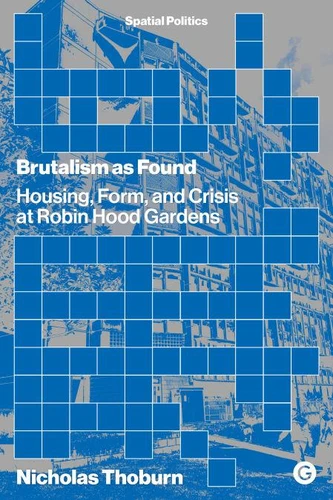
A critical appropriation of Brutalism in the crisis conditions of today. The Robin Hood Gardens public-housing estate in East London, completed in 1972, was designed by Alison and Peter Smithson as an ethical and aesthetic encounter with the flux and crises of the social world. Now demolished by the forces of speculative development, this Brutalist estate has been the subject of much dispute. But the clichéd terms of debate-a "concrete monstrosity" or a "modernist masterpiece"-have marginalized the estate's residents and obscured its architectural originality.
Recovering the social in the architectural, this book centers the estate's lived experience of a multiracial working class, not to displace the architecture's sensory qualities of matter and form, but to radicalize them for our present. Immersed in the materials, atmospheres, social forms and afterlives of this experimental estate, Robin Hood Gardens is reconstructed here as a socio-architectural expression of our times out of joint.
A critical appropriation of Brutalism in the crisis conditions of today. The Robin Hood Gardens public-housing estate in East London, completed in 1972, was designed by Alison and Peter Smithson as an ethical and aesthetic encounter with the flux and crises of the social world. Now demolished by the forces of speculative development, this Brutalist estate has been the subject of much dispute. But the clichéd terms of debate-a "concrete monstrosity" or a "modernist masterpiece"-have marginalized the estate's residents and obscured its architectural originality.
Recovering the social in the architectural, this book centers the estate's lived experience of a multiracial working class, not to displace the architecture's sensory qualities of matter and form, but to radicalize them for our present. Immersed in the materials, atmospheres, social forms and afterlives of this experimental estate, Robin Hood Gardens is reconstructed here as a socio-architectural expression of our times out of joint.

 , qui est-ce ?
