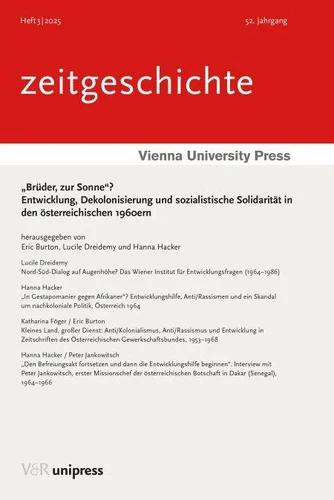
Kalter Krieg, Befreiungsbewegungen im Globalen Süden, Bürgerrechtsbewegungen in den USA und die Entwicklungspolitik als neues weltumspannendes Handlungsfeld: All das sind Bezugspunkte inter- und transnationaler Politiken im Österreich der späten 1950er- und 1960er-Jahre. Es entstanden entwicklungspolitisch orientierte ministerielle Gremien und staatsnahe Institutionen ebenso wie eine ganze Reihe an vielfach kirchlich getragenen Nicht-Regierungsorganisationen, die sich mit Entwicklungszusammenarbeit befassten.
Teilweise in einem Spannungsverhältnis dazu entfalteten sich Kooperationen zwischen Aktivist:innen beispielsweise der panafrikanischen Schwarzen Diaspora und solchen der sich als kosmopolitisch verstehenden Linken. Das vorliegende Themenheft geht der Frage nach, wie sich Akteur:innen, die der Sozialdemokratie zugerechnet werden können, im Feld dieser neuen Beziehungsmuster verorteten und welche Handlungsentwürfe damit einhergingen.
Die Beiträge eröffnen Perspektiven zu globalen und post/kolonialen Dimensionen der österreichischen Zeitgeschichte.
The Cold War, liberation movements in the Global South, civil rights movements in the United States, and development policy as a new global field of action: all of these are reference points for inter- and transnational policies in Austria in the late 1950s and 1960s. Ministerial bodies and government-related institutions which focused on development policy emerged, as well as numerous non-governmental organisations, often run by churches, dealing with development cooperation.
Partly in tension to this trend, cooperations between activists from the Pan-African Black Diaspora and those of the self-identified cosmopolitan left were created. This special issue explores how social democratic actors positioned themselves within these new relationship structures and demonstrates the associated actions. The contributions open perspectives on global and post-colonial dimensions of Austrian contemporary history.
Kalter Krieg, Befreiungsbewegungen im Globalen Süden, Bürgerrechtsbewegungen in den USA und die Entwicklungspolitik als neues weltumspannendes Handlungsfeld: All das sind Bezugspunkte inter- und transnationaler Politiken im Österreich der späten 1950er- und 1960er-Jahre. Es entstanden entwicklungspolitisch orientierte ministerielle Gremien und staatsnahe Institutionen ebenso wie eine ganze Reihe an vielfach kirchlich getragenen Nicht-Regierungsorganisationen, die sich mit Entwicklungszusammenarbeit befassten.
Teilweise in einem Spannungsverhältnis dazu entfalteten sich Kooperationen zwischen Aktivist:innen beispielsweise der panafrikanischen Schwarzen Diaspora und solchen der sich als kosmopolitisch verstehenden Linken. Das vorliegende Themenheft geht der Frage nach, wie sich Akteur:innen, die der Sozialdemokratie zugerechnet werden können, im Feld dieser neuen Beziehungsmuster verorteten und welche Handlungsentwürfe damit einhergingen.
Die Beiträge eröffnen Perspektiven zu globalen und post/kolonialen Dimensionen der österreichischen Zeitgeschichte.
The Cold War, liberation movements in the Global South, civil rights movements in the United States, and development policy as a new global field of action: all of these are reference points for inter- and transnational policies in Austria in the late 1950s and 1960s. Ministerial bodies and government-related institutions which focused on development policy emerged, as well as numerous non-governmental organisations, often run by churches, dealing with development cooperation.
Partly in tension to this trend, cooperations between activists from the Pan-African Black Diaspora and those of the self-identified cosmopolitan left were created. This special issue explores how social democratic actors positioned themselves within these new relationship structures and demonstrates the associated actions. The contributions open perspectives on global and post-colonial dimensions of Austrian contemporary history.