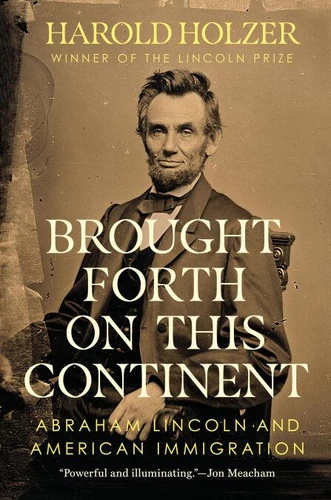
Brought Forth on This Continent. Abraham Lincoln and American Immigration
Par :Formats :
Disponible dans votre compte client Decitre ou Furet du Nord dès validation de votre commande. Le format ePub protégé est :
- Compatible avec une lecture sur My Vivlio (smartphone, tablette, ordinateur)
- Compatible avec une lecture sur liseuses Vivlio
- Pour les liseuses autres que Vivlio, vous devez utiliser le logiciel Adobe Digital Edition. Non compatible avec la lecture sur les liseuses Kindle, Remarkable et Sony
- Non compatible avec un achat hors France métropolitaine
 , qui est-ce ?
Notre partenaire de plateforme de lecture numérique où vous retrouverez l'ensemble de vos ebooks gratuitement
Pour en savoir plus sur nos ebooks, consultez notre aide en ligne ici
C'est si simple ! Lisez votre ebook avec l'app Vivlio sur votre tablette, mobile ou ordinateur :

- Nombre de pages464
- FormatePub
- ISBN978-0-451-48902-9
- EAN9780451489029
- Date de parution13/02/2024
- Protection num.Adobe DRM
- Taille65 Mo
- Infos supplémentairesepub
- ÉditeurDutton
Résumé
**Winner of the Barondess/Lincoln Award****Winner of the Lincoln Group of New York's Award of Achievement**From acclaimed Abraham Lincoln historian Harold Holzer, a groundbreaking account of Lincoln's grappling with the politics of immigration against the backdrop of the Civil War. In the three decades before the Civil War, some ten million foreign-born people settled in the United States, forever altering the nation's demographics, culture, and-perhaps most significantly-voting patterns.
America's newest residents fueled the national economy, but they also wrought enormous changes in the political landscape and exposed an ugly, at times violent, vein of nativist bigotry. Abraham Lincoln's rise ran parallel to this turmoil; even Lincoln himself did not always rise above it. Tensions over immigration would split and ultimately destroy Lincoln's Whig Party years before the Civil War.
Yet the war made clear just how important immigrants were, and how interwoven they had become in American society. Harold Holzer, winner of the Lincoln Prize, charts Lincoln's political career through the lens of immigration, from his role as a member of an increasingly nativist political party to his evolution into an immigration champion, a progression that would come at the same time as he refined his views on abolition and Black citizenship.
As Holzer writes, "The Civil War could not have been won without Lincoln's leadership; but it could not have been fought without the immigrant soldiers who served and, by the tens of thousands, died that the 'nation might live.'" An utterly captivating and illuminating work, Brought Forth on This Continent assesses Lincoln's life and legacy in a wholly original way, unveiling remarkable similarities between the nineteenth century and the twenty-first.
America's newest residents fueled the national economy, but they also wrought enormous changes in the political landscape and exposed an ugly, at times violent, vein of nativist bigotry. Abraham Lincoln's rise ran parallel to this turmoil; even Lincoln himself did not always rise above it. Tensions over immigration would split and ultimately destroy Lincoln's Whig Party years before the Civil War.
Yet the war made clear just how important immigrants were, and how interwoven they had become in American society. Harold Holzer, winner of the Lincoln Prize, charts Lincoln's political career through the lens of immigration, from his role as a member of an increasingly nativist political party to his evolution into an immigration champion, a progression that would come at the same time as he refined his views on abolition and Black citizenship.
As Holzer writes, "The Civil War could not have been won without Lincoln's leadership; but it could not have been fought without the immigrant soldiers who served and, by the tens of thousands, died that the 'nation might live.'" An utterly captivating and illuminating work, Brought Forth on This Continent assesses Lincoln's life and legacy in a wholly original way, unveiling remarkable similarities between the nineteenth century and the twenty-first.
A propos de Harold Holzer



8,02 €