SOLDES
Jusqu'à -70% sur une sélection d'articles*

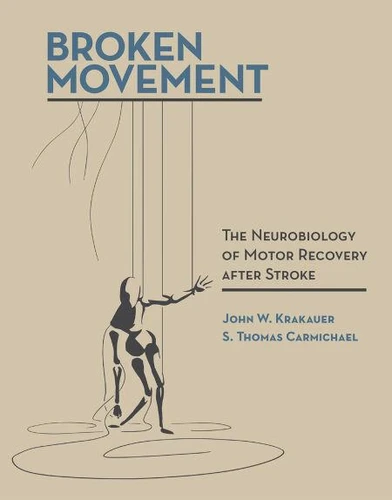
Broken Movement. The Neurobiology of Motor Recovery after Stroke
Par : ,Formats :
Disponible dans votre compte client Decitre ou Furet du Nord dès validation de votre commande. Le format ePub protégé est :
- Compatible avec une lecture sur My Vivlio (smartphone, tablette, ordinateur)
- Compatible avec une lecture sur liseuses Vivlio
- Pour les liseuses autres que Vivlio, vous devez utiliser le logiciel Adobe Digital Edition. Non compatible avec la lecture sur les liseuses Kindle, Remarkable et Sony
- Non compatible avec un achat hors France métropolitaine
 , qui est-ce ?
Notre partenaire de plateforme de lecture numérique où vous retrouverez l'ensemble de vos ebooks gratuitement
Pour en savoir plus sur nos ebooks, consultez notre aide en ligne ici
C'est si simple ! Lisez votre ebook avec l'app Vivlio sur votre tablette, mobile ou ordinateur :

- Nombre de pages288
- FormatePub
- ISBN978-0-262-34397-8
- EAN9780262343978
- Date de parution16/11/2017
- Protection num.Adobe DRM
- Taille25 Mo
- Infos supplémentairesepub
- ÉditeurThe MIT Press
Résumé
An account of the neurobiology of motor recovery in the arm and hand after stroke by two experts in the field. Stroke is a leading cause of disability in adults and recovery is often difficult, with existing rehabilitation therapies largely ineffective. In Broken Movement, John Krakauer and S. Thomas Carmichael, both experts in the field, provide an account of the neurobiology of motor recovery in the arm and hand after stroke.
They cover topics that range from behavior to physiology to cellular and molecular biology. Broken Movement is the only accessible single-volume work that covers motor control and motor learning as they apply to stroke recovery and combines them with motor cortical physiology and molecular biology. The authors cast a critical eye at current frameworks and practices, offer new recommendations for promoting recovery, and propose new research directions for the study of brain repair.
Krakauer and Carmichael discuss such subjects as the behavioral phenotype of hand and arm paresis in human and non-human primates; the physiology and anatomy of the motor system after stroke; mechanisms of spontaneous recovery; the time course of early recovery; the challenges of chronic stroke; and pharmacological and stem cell therapies. They argue for a new approach in which patients are subjected to higher doses and intensities of rehabilitation in a more dynamic and enriching environment early after stroke.
Finally they review the potential of four areas to improve motor recovery: video gaming and virtual reality, invasive brain stimulation, re-opening the sensitive period after stroke, and the application of precision medicine.
They cover topics that range from behavior to physiology to cellular and molecular biology. Broken Movement is the only accessible single-volume work that covers motor control and motor learning as they apply to stroke recovery and combines them with motor cortical physiology and molecular biology. The authors cast a critical eye at current frameworks and practices, offer new recommendations for promoting recovery, and propose new research directions for the study of brain repair.
Krakauer and Carmichael discuss such subjects as the behavioral phenotype of hand and arm paresis in human and non-human primates; the physiology and anatomy of the motor system after stroke; mechanisms of spontaneous recovery; the time course of early recovery; the challenges of chronic stroke; and pharmacological and stem cell therapies. They argue for a new approach in which patients are subjected to higher doses and intensities of rehabilitation in a more dynamic and enriching environment early after stroke.
Finally they review the potential of four areas to improve motor recovery: video gaming and virtual reality, invasive brain stimulation, re-opening the sensitive period after stroke, and the application of precision medicine.