SOLDES
Jusqu'à -70% sur une sélection d'articles*

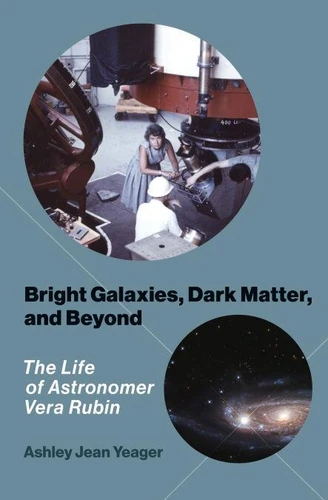
Bright Galaxies, Dark Matter, and Beyond. The Life of Astronomer Vera Rubin
Par :Formats :
Disponible dans votre compte client Decitre ou Furet du Nord dès validation de votre commande. Le format ePub protégé est :
- Compatible avec une lecture sur My Vivlio (smartphone, tablette, ordinateur)
- Compatible avec une lecture sur liseuses Vivlio
- Pour les liseuses autres que Vivlio, vous devez utiliser le logiciel Adobe Digital Edition. Non compatible avec la lecture sur les liseuses Kindle, Remarkable et Sony
- Non compatible avec un achat hors France métropolitaine
 , qui est-ce ?
Notre partenaire de plateforme de lecture numérique où vous retrouverez l'ensemble de vos ebooks gratuitement
Pour en savoir plus sur nos ebooks, consultez notre aide en ligne ici
C'est si simple ! Lisez votre ebook avec l'app Vivlio sur votre tablette, mobile ou ordinateur :

- Nombre de pages256
- FormatePub
- ISBN978-0-262-36687-8
- EAN9780262366878
- Date de parution17/08/2021
- Protection num.Adobe DRM
- Taille9 Mo
- Infos supplémentairesepub
- ÉditeurThe MIT Press
Résumé
How Vera Rubin convinced the scientific community that dark matter might exist, persevering despite early dismissals of her work. We now know that the universe is mostly dark, made up of particles and forces that are undetectable even by our most powerful telescopes. The discovery of the possible existence of dark matter and dark energy signaled a Copernican-like revolution in astronomy: not only are we not the center of the universe, neither is the stuff of which we're made.
Astronomer Vera Rubin (1928-2016) played a pivotal role in this discovery. By showing that some astronomical objects seem to defy gravity's grip, Rubin helped convince the scientific community of the possibility of dark matter. In Bright Galaxies, Dark Matter, and Beyond, Ashley Jean Yeager tells the story of Rubin's life and work, recounting her persistence despite early dismissals of her work and widespread sexism in science. Yeager describes Rubin's childhood fascination with stars, her education at Vassar and Cornell, and her marriage to a fellow scientist.
At first, Rubin wasn't taken seriously; she was a rarity, a woman in science, and her findings seemed almost incredible. Some observatories in midcentury America restricted women from using their large telescopes; Rubin was unable to collect her own data until a decade after she had earned her PhD. Still, she continued her groundbreaking work, driving a scientific revolution. She received the National Medal of Science in 1993, but never the Nobel Prize-perhaps overlooked because of her gender.
She's since been memorialized with a ridge on Mars, an asteroid, a galaxy, and most recently, the Vera C. Rubin Observatory-the first national observatory named after a woman.
Astronomer Vera Rubin (1928-2016) played a pivotal role in this discovery. By showing that some astronomical objects seem to defy gravity's grip, Rubin helped convince the scientific community of the possibility of dark matter. In Bright Galaxies, Dark Matter, and Beyond, Ashley Jean Yeager tells the story of Rubin's life and work, recounting her persistence despite early dismissals of her work and widespread sexism in science. Yeager describes Rubin's childhood fascination with stars, her education at Vassar and Cornell, and her marriage to a fellow scientist.
At first, Rubin wasn't taken seriously; she was a rarity, a woman in science, and her findings seemed almost incredible. Some observatories in midcentury America restricted women from using their large telescopes; Rubin was unable to collect her own data until a decade after she had earned her PhD. Still, she continued her groundbreaking work, driving a scientific revolution. She received the National Medal of Science in 1993, but never the Nobel Prize-perhaps overlooked because of her gender.
She's since been memorialized with a ridge on Mars, an asteroid, a galaxy, and most recently, the Vera C. Rubin Observatory-the first national observatory named after a woman.