
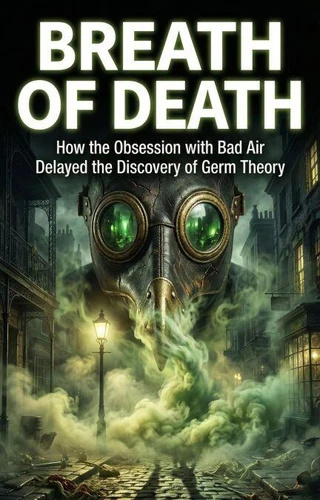
Breath of Death. How the Obsession with Bad Air Delayed the Discovery of Germ Theory
Par :Formats :
Disponible dans votre compte client Decitre ou Furet du Nord dès validation de votre commande. Le format ePub est :
- Compatible avec une lecture sur My Vivlio (smartphone, tablette, ordinateur)
- Compatible avec une lecture sur liseuses Vivlio
- Pour les liseuses autres que Vivlio, vous devez utiliser le logiciel Adobe Digital Edition. Non compatible avec la lecture sur les liseuses Kindle, Remarkable et Sony
 , qui est-ce ?
Notre partenaire de plateforme de lecture numérique où vous retrouverez l'ensemble de vos ebooks gratuitement
Pour en savoir plus sur nos ebooks, consultez notre aide en ligne ici
C'est si simple ! Lisez votre ebook avec l'app Vivlio sur votre tablette, mobile ou ordinateur :

- Nombre de pages156
- FormatePub
- ISBN978-3-565-29271-4
- EAN9783565292714
- Date de parution04/03/2026
- Protection num.pas de protection
- Taille678 Ko
- Infos supplémentairesepub
- ÉditeurEmphaloz Publishing House
Résumé
For centuries, the brightest medical minds in the world believed that diseases like cholera, the plague, and malaria were caused by "miasma"-a toxic, foul-smelling vapor emanating from rotting organic matter. If it smelled bad, it was deadly. This deeply flawed paradigm dictated public health policies across Europe, leading to bizarre practices like carrying fragrant herbs to ward off infection while completely ignoring contaminated water supplies.
The adherence to miasma theory was so absolute that it blinded the medical establishment to the truth.
When pioneers like John Snow mapped cholera outbreaks to specific water pumps, or Ignaz Semmelweis suggested that doctors were transmitting invisible particles from corpses to pregnant women, they were ridiculed and exiled. The institutional ego of Victorian medicine refused to accept that illnesses were caused by microscopic organisms rather than dramatic, visible clouds of bad air. This captivating historical narrative traces the long, stubborn battle between miasma and germ theory.
It explores how cognitive biases and academic pride can severely delay scientific progress, costing millions of lives, and illustrates the immense difficulty of dismantling a universally accepted scientific illusion.
When pioneers like John Snow mapped cholera outbreaks to specific water pumps, or Ignaz Semmelweis suggested that doctors were transmitting invisible particles from corpses to pregnant women, they were ridiculed and exiled. The institutional ego of Victorian medicine refused to accept that illnesses were caused by microscopic organisms rather than dramatic, visible clouds of bad air. This captivating historical narrative traces the long, stubborn battle between miasma and germ theory.
It explores how cognitive biases and academic pride can severely delay scientific progress, costing millions of lives, and illustrates the immense difficulty of dismantling a universally accepted scientific illusion.