SOLDES
Jusqu'à -70% sur une sélection d'articles*

Nouveauté
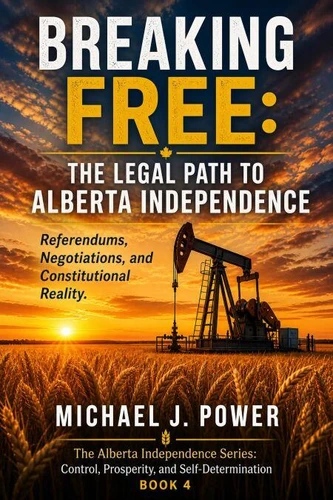
Breaking Free: The Legal Path to Alberta Independence. The Alberta Independence Series: Control, Properity, and Self-Determination, #4
Par :Formats :
Disponible dans votre compte client Decitre ou Furet du Nord dès validation de votre commande. Le format ePub est :
- Compatible avec une lecture sur My Vivlio (smartphone, tablette, ordinateur)
- Compatible avec une lecture sur liseuses Vivlio
- Pour les liseuses autres que Vivlio, vous devez utiliser le logiciel Adobe Digital Edition. Non compatible avec la lecture sur les liseuses Kindle, Remarkable et Sony
 , qui est-ce ?
Notre partenaire de plateforme de lecture numérique où vous retrouverez l'ensemble de vos ebooks gratuitement
Pour en savoir plus sur nos ebooks, consultez notre aide en ligne ici
C'est si simple ! Lisez votre ebook avec l'app Vivlio sur votre tablette, mobile ou ordinateur :

- FormatePub
- ISBN8235899841
- EAN9798235899841
- Date de parution14/05/2026
- Protection num.pas de protection
- Infos supplémentairesepub
- ÉditeurIoakim Ioakim
Résumé
Breaking Free: The Legal Path to Alberta Independence is the definitive guide to the constitutional, judicial, and international processes that shape any lawful separation movement. This volume strips away emotion and speculation, focusing instead on the hard legal realities that determine whether a province can become a nation - and how that process must unfold to achieve legitimacy at home and recognition abroad.
The book begins by examining the core question: Can a province legally separate? It outlines the constitutional principles, judicial precedents, and international norms that define the limits of provincial authority and the requirements for a lawful transition to sovereignty. It clarifies the difference between political will and legal mandate, and explains how "clear will" must be demonstrated in a manner that withstands constitutional scrutiny.
From there, the book explores the constitutional architecture that governs secession, including the amending formula, the division of powers, and the conventions that shape negotiation obligations. It provides a detailed analysis of how a referendum must be structured, monitored, and certified to trigger a legal duty to negotiate. The negotiation phase is examined in depth: transitional governance, overlapping jurisdictions, asset and debt division, dispute-resolution mechanisms, and the drafting and ratification of a final separation agreement.
The book also addresses the complex legal landscape surrounding Indigenous rights, treaty continuity, and parallel negotiation tracks. Finally, the volume explains how a new state gains international recognition, joins global institutions, establishes diplomatic relations, and demonstrates stability to trade partners and international courts. Clear, disciplined, and grounded in law rather than rhetoric, Breaking Free provides the roadmap for any reader seeking to understand what a lawful, legitimate, and internationally recognized path to Alberta independence would actually require.
The book begins by examining the core question: Can a province legally separate? It outlines the constitutional principles, judicial precedents, and international norms that define the limits of provincial authority and the requirements for a lawful transition to sovereignty. It clarifies the difference between political will and legal mandate, and explains how "clear will" must be demonstrated in a manner that withstands constitutional scrutiny.
From there, the book explores the constitutional architecture that governs secession, including the amending formula, the division of powers, and the conventions that shape negotiation obligations. It provides a detailed analysis of how a referendum must be structured, monitored, and certified to trigger a legal duty to negotiate. The negotiation phase is examined in depth: transitional governance, overlapping jurisdictions, asset and debt division, dispute-resolution mechanisms, and the drafting and ratification of a final separation agreement.
The book also addresses the complex legal landscape surrounding Indigenous rights, treaty continuity, and parallel negotiation tracks. Finally, the volume explains how a new state gains international recognition, joins global institutions, establishes diplomatic relations, and demonstrates stability to trade partners and international courts. Clear, disciplined, and grounded in law rather than rhetoric, Breaking Free provides the roadmap for any reader seeking to understand what a lawful, legitimate, and internationally recognized path to Alberta independence would actually require.