
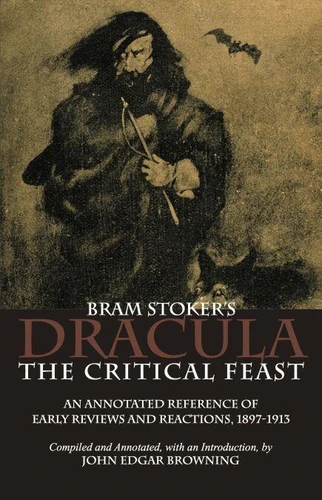
Bram Stoker's Dracula: The Critical Feast
Par :Formats :
Disponible dans votre compte client Decitre ou Furet du Nord dès validation de votre commande. Le format ePub est :
- Compatible avec une lecture sur My Vivlio (smartphone, tablette, ordinateur)
- Compatible avec une lecture sur liseuses Vivlio
- Pour les liseuses autres que Vivlio, vous devez utiliser le logiciel Adobe Digital Edition. Non compatible avec la lecture sur les liseuses Kindle, Remarkable et Sony
 , qui est-ce ?
Notre partenaire de plateforme de lecture numérique où vous retrouverez l'ensemble de vos ebooks gratuitement
Pour en savoir plus sur nos ebooks, consultez notre aide en ligne ici
C'est si simple ! Lisez votre ebook avec l'app Vivlio sur votre tablette, mobile ou ordinateur :

- FormatePub
- ISBN978-1-937002-52-7
- EAN9781937002527
- Date de parution12/02/2016
- Protection num.pas de protection
- Infos supplémentairesepub
- ÉditeurJohn R. Mabry
Résumé
There is a common misconception that the early critical reception of Bram Stoker's famed vampire novel, Dracula (1897), was "mixed." This reference book sets out to dispel this myth en force by offering the most exhaustive collection of early critical responses to Stoker's novel ever assembled, including some 91 reviews and reactions as well as 36 different press notices, many of which have not been seen in print since they appeared over 100 years ago.
What these early critical responses reveal about Dracula's writing is that it was predominantly seen by early reviewers and responders to parallel, even supersede the Gothic horror works of such canonical writers as Mary Shelley, Ann Radcliffe, and Edgar Allan Poe. Accompanying the critical responses are annotations and an introduction by the editor, a bibliographical afterword by J. Gordon Melton, 32 illustrations, and a bibliography.
What these early critical responses reveal about Dracula's writing is that it was predominantly seen by early reviewers and responders to parallel, even supersede the Gothic horror works of such canonical writers as Mary Shelley, Ann Radcliffe, and Edgar Allan Poe. Accompanying the critical responses are annotations and an introduction by the editor, a bibliographical afterword by J. Gordon Melton, 32 illustrations, and a bibliography.
A propos de John Edgar Browning
3,49 €