SOLDES
Jusqu'à -70% sur une sélection d'articles*

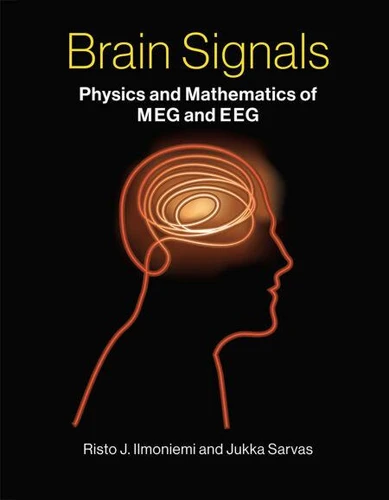
Brain Signals. Physics and Mathematics of MEG and EEG
Par : ,Formats :
Disponible dans votre compte client Decitre ou Furet du Nord dès validation de votre commande. Le format ePub protégé est :
- Compatible avec une lecture sur My Vivlio (smartphone, tablette, ordinateur)
- Compatible avec une lecture sur liseuses Vivlio
- Pour les liseuses autres que Vivlio, vous devez utiliser le logiciel Adobe Digital Edition. Non compatible avec la lecture sur les liseuses Kindle, Remarkable et Sony
- Non compatible avec un achat hors France métropolitaine
 , qui est-ce ?
Notre partenaire de plateforme de lecture numérique où vous retrouverez l'ensemble de vos ebooks gratuitement
Pour en savoir plus sur nos ebooks, consultez notre aide en ligne ici
C'est si simple ! Lisez votre ebook avec l'app Vivlio sur votre tablette, mobile ou ordinateur :

- Nombre de pages256
- FormatePub
- ISBN978-0-262-35282-6
- EAN9780262352826
- Date de parution28/05/2019
- Protection num.Adobe DRM
- Taille30 Mo
- Infos supplémentairesepub
- ÉditeurThe MIT Press
Résumé
A unified treatment of the generation and analysis of brain-generated electromagnetic fields. In Brain Signals, Risto Ilmoniemi and Jukka Sarvas present the basic physical and mathematical principles of magnetoencephalography (MEG) and electroencephalography (EEG), describing what kind of information is available in the neuroelectromagnetic field and how the measured MEG and EEG signals can be analyzed.
Unlike most previous works on these topics, which have been collections of writings by different authors using different conventions, this book presents the material in a unified manner, providing the reader with a thorough understanding of basic principles and a firm basis for analyzing data generated by MEG and EEG. The book first provides a brief introduction to brain states and the early history of EEG and MEG, describes the generation of electromagnetic fields by neuronal activity, and discusses the electromagnetic forward problem.
The authors then turn to EEG and MEG analysis, offering a review of linear and matrix algebra and basic statistics needed for analysis of the data, and presenting several analysis methods: dipole fitting; the minimum norm estimate (MNE); beamforming; the multiple signal classification algorithm (MUSIC), including RAP-MUSIC with the RAP dilemma and TRAP-MUSIC, which removes the RAP dilemma; independent component analysis (ICA); and blind source separation (BSS) with joint diagonalization.
Unlike most previous works on these topics, which have been collections of writings by different authors using different conventions, this book presents the material in a unified manner, providing the reader with a thorough understanding of basic principles and a firm basis for analyzing data generated by MEG and EEG. The book first provides a brief introduction to brain states and the early history of EEG and MEG, describes the generation of electromagnetic fields by neuronal activity, and discusses the electromagnetic forward problem.
The authors then turn to EEG and MEG analysis, offering a review of linear and matrix algebra and basic statistics needed for analysis of the data, and presenting several analysis methods: dipole fitting; the minimum norm estimate (MNE); beamforming; the multiple signal classification algorithm (MUSIC), including RAP-MUSIC with the RAP dilemma and TRAP-MUSIC, which removes the RAP dilemma; independent component analysis (ICA); and blind source separation (BSS) with joint diagonalization.