SOLDES
Jusqu'à -70% sur une sélection d'articles*

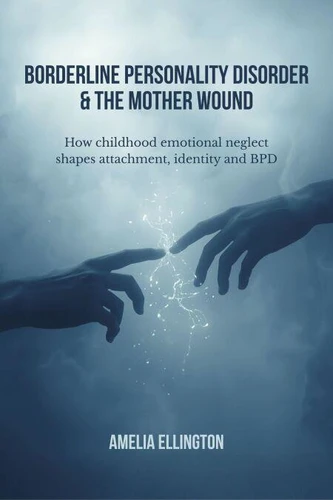
Borderline Personality Disorder & the Mother Wound. How Childhood Emotional Neglect Shapes Attachment, Identity, and BPD
Par :Formats :
Disponible dans votre compte client Decitre ou Furet du Nord dès validation de votre commande. Le format ePub est :
- Compatible avec une lecture sur My Vivlio (smartphone, tablette, ordinateur)
- Compatible avec une lecture sur liseuses Vivlio
- Pour les liseuses autres que Vivlio, vous devez utiliser le logiciel Adobe Digital Edition. Non compatible avec la lecture sur les liseuses Kindle, Remarkable et Sony
 , qui est-ce ?
Notre partenaire de plateforme de lecture numérique où vous retrouverez l'ensemble de vos ebooks gratuitement
Pour en savoir plus sur nos ebooks, consultez notre aide en ligne ici
C'est si simple ! Lisez votre ebook avec l'app Vivlio sur votre tablette, mobile ou ordinateur :

- FormatePub
- ISBN8224531806
- EAN9798224531806
- Date de parution09/01/2026
- Protection num.pas de protection
- Infos supplémentairesepub
- ÉditeurDraft2Digital
Résumé
Not all wounds are caused by cruelty. Some are caused by absence, inconsistency, and emotional misattunement. In Borderline Personality Disorder & the Mother Wound, Amelia Ellington explores the quiet developmental fracture that occurs when a child is loved but never truly "met." Moving beyond oversimplified labels, this book argues that many cases of BPD-particularly "quiet" or high-functioning variants-originate not in overt abuse, but in early relational confusion.
When a mother is physically present but emotionally inaccessible, the sensitive child learns a devastating lesson: connection is unpredictable, and I must adapt my very identity to survive it. Drawing on attachment theory and developmental psychology, Ellington examines how early mirroring failures prevent the consolidation of a stable self. This is a rigorous yet compassionate deep dive into the "Mother Wound"-a term often misunderstood as mother-blaming, but here redefined as a structural deficit in emotional availability.
The book traces how maternal inconsistency destabilizes the nervous system, leading to the adult expressions of BPD: hyper-vigilance, identity disturbance, and an agonizing fear of abandonment. By naming this "ambiguous loss, " Ellington provides readers with the psychological vocabulary to grieve a wound that was never acknowledged as one. Borderline Personality Disorder & the Mother Wound is an unsentimental roadmap for healing without the need for confrontation or reconciliation fantasies.
Through chapters on "Reparenting Without Fantasy" and "Grieving What Never Happened, " Ellington offers a grounded path toward emotional endurance and forward integration. This work is an essential inquiry for anyone struggling with intimacy or a fragile sense of self, proving that understanding the source of the fracture is the only way to stop bleeding into the present. You did not imagine the absence; naming it is the beginning of coherence.
When a mother is physically present but emotionally inaccessible, the sensitive child learns a devastating lesson: connection is unpredictable, and I must adapt my very identity to survive it. Drawing on attachment theory and developmental psychology, Ellington examines how early mirroring failures prevent the consolidation of a stable self. This is a rigorous yet compassionate deep dive into the "Mother Wound"-a term often misunderstood as mother-blaming, but here redefined as a structural deficit in emotional availability.
The book traces how maternal inconsistency destabilizes the nervous system, leading to the adult expressions of BPD: hyper-vigilance, identity disturbance, and an agonizing fear of abandonment. By naming this "ambiguous loss, " Ellington provides readers with the psychological vocabulary to grieve a wound that was never acknowledged as one. Borderline Personality Disorder & the Mother Wound is an unsentimental roadmap for healing without the need for confrontation or reconciliation fantasies.
Through chapters on "Reparenting Without Fantasy" and "Grieving What Never Happened, " Ellington offers a grounded path toward emotional endurance and forward integration. This work is an essential inquiry for anyone struggling with intimacy or a fragile sense of self, proving that understanding the source of the fracture is the only way to stop bleeding into the present. You did not imagine the absence; naming it is the beginning of coherence.