SOLDES
Jusqu'à -70% sur une sélection d'articles*

Nouveauté
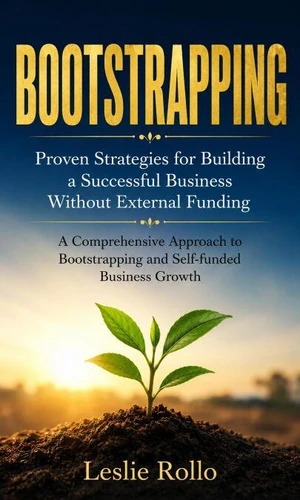
Bootstrapping: Proven Strategies for Building a Successful Business Without External Funding (A Comprehensive Approach to Bootstrapping and Self-funded Business Growth)
Par :Formats :
Disponible dans votre compte client Decitre ou Furet du Nord dès validation de votre commande. Le format ePub est :
- Compatible avec une lecture sur My Vivlio (smartphone, tablette, ordinateur)
- Compatible avec une lecture sur liseuses Vivlio
- Pour les liseuses autres que Vivlio, vous devez utiliser le logiciel Adobe Digital Edition. Non compatible avec la lecture sur les liseuses Kindle, Remarkable et Sony
 , qui est-ce ?
Notre partenaire de plateforme de lecture numérique où vous retrouverez l'ensemble de vos ebooks gratuitement
Pour en savoir plus sur nos ebooks, consultez notre aide en ligne ici
C'est si simple ! Lisez votre ebook avec l'app Vivlio sur votre tablette, mobile ou ordinateur :

- FormatePub
- ISBN8235764606
- EAN9798235764606
- Date de parution07/06/2026
- Protection num.pas de protection
- Infos supplémentairesepub
- ÉditeurIoakim Ioakim
Résumé
Bootstrapping is the process of starting and growing a business using personal savings, revenue generated by the business, and minimal external financial support. Unlike startups that rely on venture capital, angel investors, or bank loans, bootstrapped businesses focus on self-sufficiency and sustainable growth. This approach allows entrepreneurs to maintain full ownership and control over their companies while developing products and services that meet customer needs.
One of the primary advantages of bootstrapping is financial independence. Since founders do not have to give up equity or answer to outside investors, they can make decisions based on their long-term vision rather than short-term financial pressures. This autonomy often encourages innovation, careful budgeting, and strategic planning. Entrepreneurs who bootstrap their businesses learn to maximize limited resources, prioritize essential expenses, and focus on generating revenue from the earliest stages of operation.
Bootstrapping also promotes a customer-centric approach. Because the business depends on its own earnings for growth, founders must pay close attention to customer satisfaction, market demand, and product quality. This direct relationship between revenue and growth helps create a strong foundation for long-term success. Many well-known companies began as bootstrapped ventures before achieving significant growth and recognition.
However, bootstrapping comes with challenges. Limited financial resources can restrict marketing efforts, hiring opportunities, product development, and expansion plans. Entrepreneurs often face increased workloads and must carefully manage cash flow to avoid financial difficulties. Growth may be slower compared to businesses backed by substantial investment capital. Despite these challenges, bootstrapping remains a popular and effective strategy for entrepreneurs who value independence, financial discipline, and sustainable growth.
By leveraging creativity, resourcefulness, and a strong commitment to customer needs, bootstrapped businesses can achieve long-term success without relying heavily on external funding. As a result, bootstrapping is widely regarded as a practical and empowering approach to entrepreneurship, enabling founders to transform innovative ideas into profitable and resilient businesses while maintaining full control over their vision and operations.
One of the primary advantages of bootstrapping is financial independence. Since founders do not have to give up equity or answer to outside investors, they can make decisions based on their long-term vision rather than short-term financial pressures. This autonomy often encourages innovation, careful budgeting, and strategic planning. Entrepreneurs who bootstrap their businesses learn to maximize limited resources, prioritize essential expenses, and focus on generating revenue from the earliest stages of operation.
Bootstrapping also promotes a customer-centric approach. Because the business depends on its own earnings for growth, founders must pay close attention to customer satisfaction, market demand, and product quality. This direct relationship between revenue and growth helps create a strong foundation for long-term success. Many well-known companies began as bootstrapped ventures before achieving significant growth and recognition.
However, bootstrapping comes with challenges. Limited financial resources can restrict marketing efforts, hiring opportunities, product development, and expansion plans. Entrepreneurs often face increased workloads and must carefully manage cash flow to avoid financial difficulties. Growth may be slower compared to businesses backed by substantial investment capital. Despite these challenges, bootstrapping remains a popular and effective strategy for entrepreneurs who value independence, financial discipline, and sustainable growth.
By leveraging creativity, resourcefulness, and a strong commitment to customer needs, bootstrapped businesses can achieve long-term success without relying heavily on external funding. As a result, bootstrapping is widely regarded as a practical and empowering approach to entrepreneurship, enabling founders to transform innovative ideas into profitable and resilient businesses while maintaining full control over their vision and operations.