Book of Freyja is a mythic, devotional, and magical journey into the heart of the Norse goddess Freyja; the Shining One, Queen of Fólkvangr, Mistress of Seiðr, and embodiment of the sacred feminine in all her beauty, ferocity, and contradiction. This book is neither a simple retelling of Norse myth nor a dry manual of ritual practice. It is a threshold: an invitation to step through story, spell, and symbol into the living presence of one of the most complex and beloved deities of the Northern tradition.
Within these pages, Freyja emerges not as a softened figure of romance alone, but as a goddess of power and paradox. She is lover and warrior, sorceress and queen of the slain, weaver of fate and keeper of desire. She rides the battlefields and the dream paths alike, weeping tears of amber for her lost husband Óðr while choosing fallen warriors for her hall. She teaches that beauty is not weakness, that sexuality is sacred, and that grief itself can be transformed into strength.
The book explores Freyja's myths with depth and reverence, retelling the great tales of the Æsir and Vanir, her imprisonment and deception, the war born of gold and betrayal, and her enduring role as mediator between worlds. These stories are rendered with poetic intensity, restoring the raw emotional and spiritual force often lost in modern summaries. Through them, readers encounter a Freyja who demands honesty, courage, and self-knowledge.
Alongside myth, Book of Freyja offers practical spiritual material rooted in Northern magical tradition. Detailed discussions of Seiðr illuminate Freyja's role as its first and greatest teacher, revealing trance work, fate-weaving, spirit communication, and the ethics of exchange that govern her magic. Rituals, prayers, invocations, and offerings are presented with care and precision, emphasizing respect, balance, and the ancient law of gift for gift.
Freyja is shown not as a distant goddess, but as one who listens, responds, and expects sincerity from those who call to her. The book also explores Freyja's runes, symbols, animals, herbs, and sacred tools, weaving together cosmology, mythology, and lived spiritual practice. Her cats, her boar, her falcon cloak, her necklace Brísingamen, and her connection to fertility, death, wealth, sexuality, and prophecy are all examined as living currents rather than static symbols.
Freyja's magic is presented as embodied power; magic that flows through desire, creativity, grief, and the physical world rather than escaping it. At its core, Book of Freyja is a work of remembrance and reclamation. It speaks to women who are tired of shrinking, to witches and seekers drawn to the old gods, and to anyone who feels the pull of a goddess who refuses to be simplified. It honors the sacred feminine not as fragile or passive, but as fire, storm, and soil-capable of love, destruction, creation, and transformation in equal measure.
To read this book is to follow the golden thread Freyja left scattered through the Nine Worlds, and to discover, between myth and magic, the part of yourself that still glows in the dark.
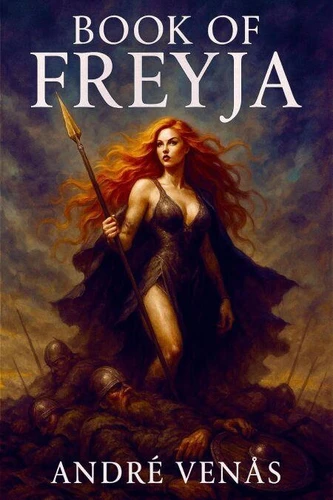
Book of Freyja is a mythic, devotional, and magical journey into the heart of the Norse goddess Freyja; the Shining One, Queen of Fólkvangr, Mistress of Seiðr, and embodiment of the sacred feminine in all her beauty, ferocity, and contradiction. This book is neither a simple retelling of Norse myth nor a dry manual of ritual practice. It is a threshold: an invitation to step through story, spell, and symbol into the living presence of one of the most complex and beloved deities of the Northern tradition.
Within these pages, Freyja emerges not as a softened figure of romance alone, but as a goddess of power and paradox. She is lover and warrior, sorceress and queen of the slain, weaver of fate and keeper of desire. She rides the battlefields and the dream paths alike, weeping tears of amber for her lost husband Óðr while choosing fallen warriors for her hall. She teaches that beauty is not weakness, that sexuality is sacred, and that grief itself can be transformed into strength.
The book explores Freyja's myths with depth and reverence, retelling the great tales of the Æsir and Vanir, her imprisonment and deception, the war born of gold and betrayal, and her enduring role as mediator between worlds. These stories are rendered with poetic intensity, restoring the raw emotional and spiritual force often lost in modern summaries. Through them, readers encounter a Freyja who demands honesty, courage, and self-knowledge.
Alongside myth, Book of Freyja offers practical spiritual material rooted in Northern magical tradition. Detailed discussions of Seiðr illuminate Freyja's role as its first and greatest teacher, revealing trance work, fate-weaving, spirit communication, and the ethics of exchange that govern her magic. Rituals, prayers, invocations, and offerings are presented with care and precision, emphasizing respect, balance, and the ancient law of gift for gift.
Freyja is shown not as a distant goddess, but as one who listens, responds, and expects sincerity from those who call to her. The book also explores Freyja's runes, symbols, animals, herbs, and sacred tools, weaving together cosmology, mythology, and lived spiritual practice. Her cats, her boar, her falcon cloak, her necklace Brísingamen, and her connection to fertility, death, wealth, sexuality, and prophecy are all examined as living currents rather than static symbols.
Freyja's magic is presented as embodied power; magic that flows through desire, creativity, grief, and the physical world rather than escaping it. At its core, Book of Freyja is a work of remembrance and reclamation. It speaks to women who are tired of shrinking, to witches and seekers drawn to the old gods, and to anyone who feels the pull of a goddess who refuses to be simplified. It honors the sacred feminine not as fragile or passive, but as fire, storm, and soil-capable of love, destruction, creation, and transformation in equal measure.
To read this book is to follow the golden thread Freyja left scattered through the Nine Worlds, and to discover, between myth and magic, the part of yourself that still glows in the dark.


 , qui est-ce ?