Nouveauté
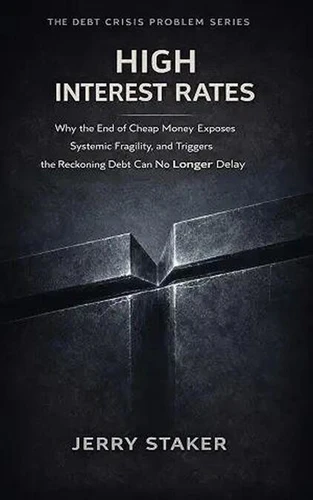
Book #6 – High Interest Rates: Why the End of Cheap Money Exposes Systemic Fragility – and Triggers the Reckoning Debt Can No Longer Delay. Debt Crisis Problem Series (20+ Books), #6
Par :Formats :
Disponible dans votre compte client Decitre ou Furet du Nord dès validation de votre commande. Le format ePub est :
- Compatible avec une lecture sur My Vivlio (smartphone, tablette, ordinateur)
- Compatible avec une lecture sur liseuses Vivlio
- Pour les liseuses autres que Vivlio, vous devez utiliser le logiciel Adobe Digital Edition. Non compatible avec la lecture sur les liseuses Kindle, Remarkable et Sony
 , qui est-ce ?
Notre partenaire de plateforme de lecture numérique où vous retrouverez l'ensemble de vos ebooks gratuitement
Pour en savoir plus sur nos ebooks, consultez notre aide en ligne ici
C'est si simple ! Lisez votre ebook avec l'app Vivlio sur votre tablette, mobile ou ordinateur :

- FormatePub
- ISBN8235841215
- EAN9798235841215
- Date de parution10/07/2026
- Protection num.pas de protection
- Infos supplémentairesepub
- ÉditeurIoakim Ioakim
Résumé
High interest rates did not create the problem. They revealed it. Years of artificially low rates allowed debt to expand without discipline. When rates rise, that structure is tested - and often fails. This book is for readers who want to understand why higher rates act as a trigger rather than a cause. It addresses the misconception that rate increases are temporary disruptions rather than structural exposure.
Readers will gain: Insight into how low-rate policy distorted markets Understanding of refinancing risk as the true failure point Clarity on how higher rates impact households, businesses, and governments Recognition of asset deflation and credit contraction dynamics Awareness of how policy space disappears under stress The Impact Analysis presents a Base Case of prolonged strain and a Downside Case where refinancing failure cascades into systemic crisis.
Book #6 of The Debt Crisis Problem Series, this volume shows how rising rates force reality into systems built on cheap debt. Continue to Book #7 to examine what happens when confidence in government obligations begins to fail. Rates do not cause fragility - they expose it.
Readers will gain: Insight into how low-rate policy distorted markets Understanding of refinancing risk as the true failure point Clarity on how higher rates impact households, businesses, and governments Recognition of asset deflation and credit contraction dynamics Awareness of how policy space disappears under stress The Impact Analysis presents a Base Case of prolonged strain and a Downside Case where refinancing failure cascades into systemic crisis.
Book #6 of The Debt Crisis Problem Series, this volume shows how rising rates force reality into systems built on cheap debt. Continue to Book #7 to examine what happens when confidence in government obligations begins to fail. Rates do not cause fragility - they expose it.