SOLDES
Jusqu'à -70% sur une sélection d'articles*

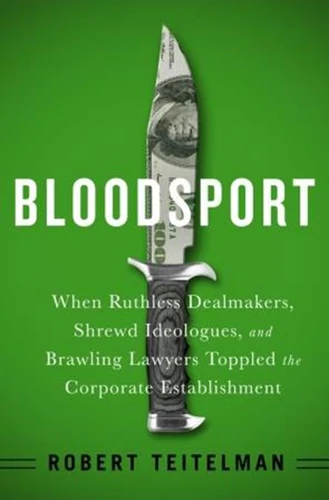
Bloodsport. When Ruthless Dealmakers, Shrewd Ideologues, and Brawling Lawyers Toppled the Corporate Establishment
Par :Formats :
Disponible dans votre compte client Decitre ou Furet du Nord dès validation de votre commande. Le format ePub protégé est :
- Compatible avec une lecture sur My Vivlio (smartphone, tablette, ordinateur)
- Compatible avec une lecture sur liseuses Vivlio
- Pour les liseuses autres que Vivlio, vous devez utiliser le logiciel Adobe Digital Edition. Non compatible avec la lecture sur les liseuses Kindle, Remarkable et Sony
- Non compatible avec un achat hors France métropolitaine
 , qui est-ce ?
Notre partenaire de plateforme de lecture numérique où vous retrouverez l'ensemble de vos ebooks gratuitement
Pour en savoir plus sur nos ebooks, consultez notre aide en ligne ici
C'est si simple ! Lisez votre ebook avec l'app Vivlio sur votre tablette, mobile ou ordinateur :

- Nombre de pages432
- FormatePub
- ISBN978-1-61039-414-7
- EAN9781610394147
- Date de parution04/04/2016
- Protection num.Adobe DRM
- Infos supplémentairesepub
- ÉditeurPublicAffairs
Résumé
The epic battle of the fascinating, flawed figures behind America's deal culture and their fight over who controls and who benefits from the immense wealth of American corporations. Bloodsport is the story of how the mania for corporate deals and mergers all began. The riveting tale of how power lawyers Joe Flom and Marty Lipton, major Wall Street players Felix Rohatyn and Bruce Wasserstein, prominent jurists, and shrewd ideologues in academic garb provided the intellectual firepower, creativity, and energy that drove the corporate elite into a less cozy, Hobbesian world.
With total dollar volume in the trillions, the zeal for the deal continues unabated to this day. Underpinning this explosion in mergers and acquisitions -- including hostile takeovers -- are four questions that radically disrupted corporate ownership in the 1970s, whose force remains undiminished: Are shareholders the sole "owners" of corporations and the legitimate source of power? Should control be exercised by autonomous CEOs or is their assumption of power illegitimate and inefficient? Is the primary purpose of the corporation to generate jobs and create prosperity for the masses and the nation? Or is it simply to maximize the wealth of shareholders? This battle of ideas became the "bloodsport" of American business.
It set in motion the deal-making culture that led to the financialization of the economy and it is the backstory to ongoing debates over competitiveness, job losses, inequality, stratospheric executive pay, and who "owns" America's corporations.
With total dollar volume in the trillions, the zeal for the deal continues unabated to this day. Underpinning this explosion in mergers and acquisitions -- including hostile takeovers -- are four questions that radically disrupted corporate ownership in the 1970s, whose force remains undiminished: Are shareholders the sole "owners" of corporations and the legitimate source of power? Should control be exercised by autonomous CEOs or is their assumption of power illegitimate and inefficient? Is the primary purpose of the corporation to generate jobs and create prosperity for the masses and the nation? Or is it simply to maximize the wealth of shareholders? This battle of ideas became the "bloodsport" of American business.
It set in motion the deal-making culture that led to the financialization of the economy and it is the backstory to ongoing debates over competitiveness, job losses, inequality, stratospheric executive pay, and who "owns" America's corporations.