
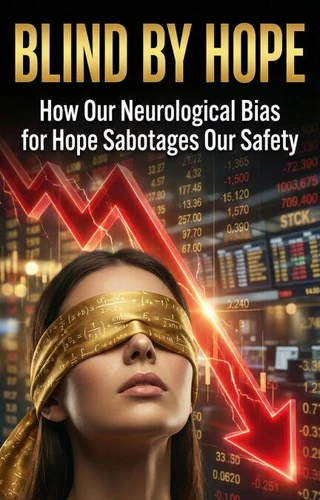
Blind by Hope. How Our Neurological Bias for Hope Sabotages Our Safety
Par :Formats :
Disponible dans votre compte client Decitre ou Furet du Nord dès validation de votre commande. Le format ePub est :
- Compatible avec une lecture sur My Vivlio (smartphone, tablette, ordinateur)
- Compatible avec une lecture sur liseuses Vivlio
- Pour les liseuses autres que Vivlio, vous devez utiliser le logiciel Adobe Digital Edition. Non compatible avec la lecture sur les liseuses Kindle, Remarkable et Sony
 , qui est-ce ?
Notre partenaire de plateforme de lecture numérique où vous retrouverez l'ensemble de vos ebooks gratuitement
Pour en savoir plus sur nos ebooks, consultez notre aide en ligne ici
C'est si simple ! Lisez votre ebook avec l'app Vivlio sur votre tablette, mobile ou ordinateur :

- Nombre de pages148
- FormatePub
- ISBN978-3-565-29265-3
- EAN9783565292653
- Date de parution04/03/2026
- Protection num.pas de protection
- Taille625 Ko
- Infos supplémentairesepub
- ÉditeurEmphaloz Publishing House
Résumé
Humans are fundamentally irrational optimists. We know that divorce rates are high, that most startups fail, and that cancer is a leading cause of death. Yet, when asked about our personal futures, our brains instantly calculate that we will be the statistical exception. This is the optimism bias, and it is hardwired into our neurological architecture.
Neuroscientists have discovered that our brains are incredibly efficient at processing positive information about the future while actively suppressing negative warnings.
While this evolutionary mechanism kept our ancestors moving forward in the face of brutal adversity, it creates massive blind spots in the modern world. This inherent delusion causes us to underinsure our homes, ignore medical symptoms, and make reckless financial investments, firmly believing that tragedy only strikes other people. This compelling exploration of the human mind unravels the paradox of hope.
It examines how this cognitive shield protects our mental health while simultaneously exposing us to physical and financial ruin. By understanding the mechanics of your own optimism, you can learn to balance evolutionary hope with statistical reality, making safer, smarter choices without losing your drive.
While this evolutionary mechanism kept our ancestors moving forward in the face of brutal adversity, it creates massive blind spots in the modern world. This inherent delusion causes us to underinsure our homes, ignore medical symptoms, and make reckless financial investments, firmly believing that tragedy only strikes other people. This compelling exploration of the human mind unravels the paradox of hope.
It examines how this cognitive shield protects our mental health while simultaneously exposing us to physical and financial ruin. By understanding the mechanics of your own optimism, you can learn to balance evolutionary hope with statistical reality, making safer, smarter choices without losing your drive.