SOLDES
Jusqu'à -70% sur une sélection d'articles*

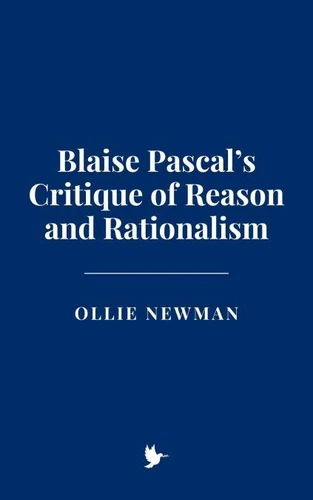
Blaise Pascal’s Critique of Reason and Rationalism
Par :Formats :
Disponible dans votre compte client Decitre ou Furet du Nord dès validation de votre commande. Le format ePub est :
- Compatible avec une lecture sur My Vivlio (smartphone, tablette, ordinateur)
- Compatible avec une lecture sur liseuses Vivlio
- Pour les liseuses autres que Vivlio, vous devez utiliser le logiciel Adobe Digital Edition. Non compatible avec la lecture sur les liseuses Kindle, Remarkable et Sony
 , qui est-ce ?
Notre partenaire de plateforme de lecture numérique où vous retrouverez l'ensemble de vos ebooks gratuitement
Pour en savoir plus sur nos ebooks, consultez notre aide en ligne ici
C'est si simple ! Lisez votre ebook avec l'app Vivlio sur votre tablette, mobile ou ordinateur :

- FormatePub
- ISBN8230616832
- EAN9798230616832
- Date de parution08/03/2025
- Protection num.pas de protection
- Infos supplémentairesepub
- ÉditeurIndependently Published
Résumé
This book explores the philosophical and theological contributions of Blaise Pascal, focusing on his critique of reason and rationalism, and the enduring relevance of his ideas in the modern intellectual landscape. Through an in-depth analysis of Pascal's Pensées, the work delves into his belief that human reason, while invaluable in scientific inquiry, is fundamentally limited when it comes to addressing the deepest questions of human existence, such as the nature of suffering, the existence of God, and the meaning of life.
Central to Pascal's thought is the concept of the human condition, which he sees as both grand and miserable-capable of great intellectual feats yet vulnerable to the vast forces of nature and the inevitability of death. His famous assertion that "the heart has its reasons which reason knows nothing of" illustrates his argument that intuition, faith, and emotion are essential faculties that provide access to truths beyond the grasp of reason alone.
Drawing from his Christian worldview, Pascal emphasized the necessity of faith as the only means of transcending the limitations of human understanding. The book also traces Pascal's profound influence on modern philosophy, particularly existentialist thought, and its implications for contemporary debates in theology, philosophy, and the sciences. By examining Pascal's critique of reason, the role of suffering, and the importance of faith, this book seeks to offer a fresh perspective on Pascal's legacy and its relevance in today's world, where questions of meaning, existence, and belief continue to challenge both intellectual and spiritual pursuits.
Central to Pascal's thought is the concept of the human condition, which he sees as both grand and miserable-capable of great intellectual feats yet vulnerable to the vast forces of nature and the inevitability of death. His famous assertion that "the heart has its reasons which reason knows nothing of" illustrates his argument that intuition, faith, and emotion are essential faculties that provide access to truths beyond the grasp of reason alone.
Drawing from his Christian worldview, Pascal emphasized the necessity of faith as the only means of transcending the limitations of human understanding. The book also traces Pascal's profound influence on modern philosophy, particularly existentialist thought, and its implications for contemporary debates in theology, philosophy, and the sciences. By examining Pascal's critique of reason, the role of suffering, and the importance of faith, this book seeks to offer a fresh perspective on Pascal's legacy and its relevance in today's world, where questions of meaning, existence, and belief continue to challenge both intellectual and spiritual pursuits.


