
Habiba Mariam Diallo was a finalist in the 2020 Bristol Short Story Prize, the 2019 Writers' Union of Canada Short Prose Competition, and the 2018 London Book Fair Pitch Competition. Habiba is an advocate and activist in support of women's maternal health.
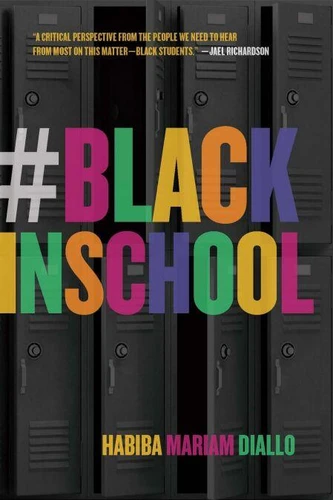
#BlackInSchool
Par : ,Formats :
Disponible dans votre compte client Decitre ou Furet du Nord dès validation de votre commande. Le format ePub est :
- Compatible avec une lecture sur My Vivlio (smartphone, tablette, ordinateur)
- Compatible avec une lecture sur liseuses Vivlio
- Pour les liseuses autres que Vivlio, vous devez utiliser le logiciel Adobe Digital Edition. Non compatible avec la lecture sur les liseuses Kindle, Remarkable et Sony
 , qui est-ce ?
Notre partenaire de plateforme de lecture numérique où vous retrouverez l'ensemble de vos ebooks gratuitement
Pour en savoir plus sur nos ebooks, consultez notre aide en ligne ici
C'est si simple ! Lisez votre ebook avec l'app Vivlio sur votre tablette, mobile ou ordinateur :

- Nombre de pages122
- FormatePub
- ISBN978-0-88977-821-4
- EAN9780889778214
- Date de parution04/09/2021
- Protection num.Digital Watermarking
- Taille4 Mo
- Infos supplémentairesepub
- ÉditeurUniversity of Regina Press
Résumé
A young Black woman documents the systemic racism in her high school diary and calls for justice and educational reform.
The prevalence of anti-Black racism and its many faces, from racial profiling to police brutality, in North America is indisputable. How do we stop racist ideas and violence if the very foundation of our society is built upon white supremacy? How do we end systemic racism if the majority do not experience it or question its existence? Do our schools instill children with the ideals of equality and tolerance, or do they reinforce differences and teach children of colour that they don't belong?
#BlackInSchool is Habiba Mariam Diallo's high school journal, in which she documents, processes, and resists the systemic racism, microaggressions, stereotypes, and outright racism she experienced while being Black in school in Canada.
Powerful and eye-opening, Diallo illustrates how our schools reinforce rather than erode racism: the handcuffing and frisking of students of colour by police at school; one-dimensional, tokenistic curricula portraying Black people; and the constant barrage of overt racism from students and staff alike.
She shows how systemic racism works, how it alienates and seeks to destroys a child's sense of self. She shows how our institutions work to erase the lived experiences of Black youth and try to erase Black youth themselves. Diallo's words will resonate with some, but should shock, appall, and animate a great many more into action towards a society that is truly equitable for all.
She shows how systemic racism works, how it alienates and seeks to destroys a child's sense of self. She shows how our institutions work to erase the lived experiences of Black youth and try to erase Black youth themselves. Diallo's words will resonate with some, but should shock, appall, and animate a great many more into action towards a society that is truly equitable for all.
A propos de Habiba Mariam Diallo
#BlackInSchool
E-book
13,99 €