


Joanna Accordi is an author and independent researcher whose work examines the psychological, philosophical, and systemic dimensions of power, trauma, identity, consciousness, and human behavior. Her writing spans analytical nonfiction, theoretical inquiry, philosophical reflection, and confessional poetry combined with visual art. Her nonfiction explores psychopathy, narcissism, coercive control, and institutional abuse, with particular attention to internal psychological architecture, ethical failure, and real-world consequences.
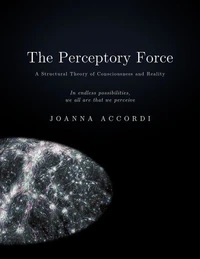
In parallel, her philosophical and poetic works approach similar themes through fragmentation, introspection, and emotional realism rather than instruction or resolution. Her most recent work turns from human behavior to the foundations of reality itself. In The Perceptory Force: A Structural Theory of Consciousness and Reality, Accordi draws on philosophy of mind, neuroscience, quantum theory, and cosmology to argue that perception is not a by-product of matter but a constituent of it, proposing an underlying perceptory force from which the known forces of physics emerge, and committing the framework to specific, falsifiable predictions.
The book reflects a concern that runs throughout her writing: a willingness to question first principles and follow an argument to its furthest, least comfortable conclusions. Accordi's professional background includes work in finance, systems analysis, and applied research. She is also involved in international discussions on Artificial Intelligence governance and regulatory frameworks, where her focus lies at the intersection of ethics, risk, and institutional accountability.
Her interest in geopolitics and global governance informs her examination of how power operates across personal, technological, and state-level systems. She writes for readers who value intellectual honesty, depth, and clarity, and who are willing to engage with complex material without expectation of comfort or simplified answers.
In parallel, her philosophical and poetic works approach similar themes through fragmentation, introspection, and emotional realism rather than instruction or resolution. Her most recent work turns from human behavior to the foundations of reality itself. In The Perceptory Force: A Structural Theory of Consciousness and Reality, Accordi draws on philosophy of mind, neuroscience, quantum theory, and cosmology to argue that perception is not a by-product of matter but a constituent of it, proposing an underlying perceptory force from which the known forces of physics emerge, and committing the framework to specific, falsifiable predictions.
The book reflects a concern that runs throughout her writing: a willingness to question first principles and follow an argument to its furthest, least comfortable conclusions. Accordi's professional background includes work in finance, systems analysis, and applied research. She is also involved in international discussions on Artificial Intelligence governance and regulatory frameworks, where her focus lies at the intersection of ethics, risk, and institutional accountability.
Her interest in geopolitics and global governance informs her examination of how power operates across personal, technological, and state-level systems. She writes for readers who value intellectual honesty, depth, and clarity, and who are willing to engage with complex material without expectation of comfort or simplified answers.