SOLDES
Jusqu'à -70% sur une sélection d'articles*

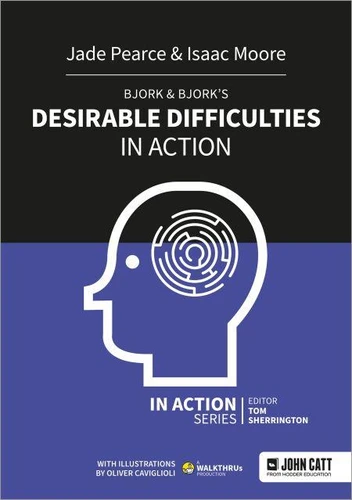
Bjork & Bjork’s Desirable Difficulties in Action
Par : ,Formats :
Disponible dans votre compte client Decitre ou Furet du Nord dès validation de votre commande. Le format ePub protégé est :
- Compatible avec une lecture sur My Vivlio (smartphone, tablette, ordinateur)
- Compatible avec une lecture sur liseuses Vivlio
- Pour les liseuses autres que Vivlio, vous devez utiliser le logiciel Adobe Digital Edition. Non compatible avec la lecture sur les liseuses Kindle, Remarkable et Sony
- Non compatible avec un achat hors France métropolitaine
 , qui est-ce ?
Notre partenaire de plateforme de lecture numérique où vous retrouverez l'ensemble de vos ebooks gratuitement
Pour en savoir plus sur nos ebooks, consultez notre aide en ligne ici
C'est si simple ! Lisez votre ebook avec l'app Vivlio sur votre tablette, mobile ou ordinateur :

- Nombre de pages84
- FormatePub
- ISBN978-1-0360-0163-6
- EAN9781036001636
- Date de parution15/03/2024
- Protection num.Adobe DRM
- Infos supplémentairesepub
- ÉditeurJohn Catt
Résumé
The concept of desirable difficulties is central to many of the evidence-informed strategies - such as spaced practice, retrieval practice and interleaving - that have become so prevalent in recent years, and so are one of the most crucial building blocks of cognitive science. Based on the finding that instruction and tasks most effective for long-term learning often hamper short-term performance, they are also one of the most counter-intuitive.
In their seminal work, Elizabeth and Robert Bjork identified four desirable difficulties - so called because they improve long-term retention and transfer while making learning seem more challenging - including varying the conditions of practice, spacing, interleaving and practice testing. Isaac Moore and Jade Pearce build on this, explaining each strategy in detail including a summary of the research evidence that supports each difficulty, how it might look in the classroom and how it might be implemented with the greatest impact.
They also discuss why students often fail to use these strategies in their independent study (despite their effectiveness) and how teachers and school leaders may encourage students to use them more. Succinct summaries and case studies from a range of practitioners will enable all readers to utilise desirable difficulties in their own classrooms and beyond.
In their seminal work, Elizabeth and Robert Bjork identified four desirable difficulties - so called because they improve long-term retention and transfer while making learning seem more challenging - including varying the conditions of practice, spacing, interleaving and practice testing. Isaac Moore and Jade Pearce build on this, explaining each strategy in detail including a summary of the research evidence that supports each difficulty, how it might look in the classroom and how it might be implemented with the greatest impact.
They also discuss why students often fail to use these strategies in their independent study (despite their effectiveness) and how teachers and school leaders may encourage students to use them more. Succinct summaries and case studies from a range of practitioners will enable all readers to utilise desirable difficulties in their own classrooms and beyond.