
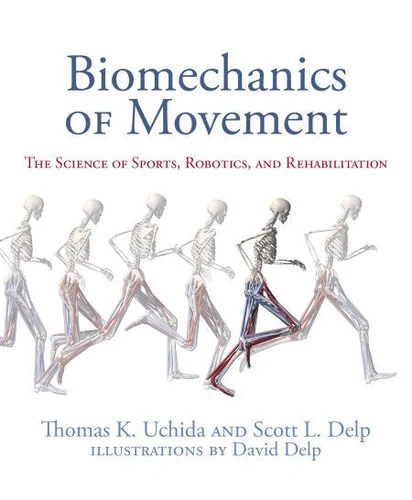
Biomechanics of Movement. The Science of Sports, Robotics, and Rehabilitation
Par : , ,Formats :
Disponible dans votre compte client Decitre ou Furet du Nord dès validation de votre commande. Le format ePub protégé est :
- Compatible avec une lecture sur My Vivlio (smartphone, tablette, ordinateur)
- Compatible avec une lecture sur liseuses Vivlio
- Pour les liseuses autres que Vivlio, vous devez utiliser le logiciel Adobe Digital Edition. Non compatible avec la lecture sur les liseuses Kindle, Remarkable et Sony
- Non compatible avec un achat hors France métropolitaine
 , qui est-ce ?
Notre partenaire de plateforme de lecture numérique où vous retrouverez l'ensemble de vos ebooks gratuitement
Pour en savoir plus sur nos ebooks, consultez notre aide en ligne ici
C'est si simple ! Lisez votre ebook avec l'app Vivlio sur votre tablette, mobile ou ordinateur :

- Nombre de pages400
- FormatePub
- ISBN978-0-262-35919-1
- EAN9780262359191
- Date de parution12/01/2021
- Protection num.Adobe DRM
- Taille20 Mo
- Infos supplémentairesepub
- ÉditeurThe MIT Press
Résumé
An engaging introduction to human and animal movement seen through the lens of mechanics. How do Olympic sprinters run so fast? Why do astronauts adopt a bounding gait on the moon? How do running shoes improve performance while preventing injuries? This engaging and generously illustrated book answers these questions by examining human and animal movement through the lens of mechanics. The authors present simple conceptual models to study walking and running and apply mechanical principles to a range of interesting examples.
They explore the biology of how movement is produced, examining the structure of a muscle down to its microscopic force-generating motors. Drawing on their deep expertise, the authors describe how to create simulations that provide insight into muscle coordination during walking and running, suggest treatments to improve function following injury, and help design devices that enhance human performance.
They explore the biology of how movement is produced, examining the structure of a muscle down to its microscopic force-generating motors. Drawing on their deep expertise, the authors describe how to create simulations that provide insight into muscle coordination during walking and running, suggest treatments to improve function following injury, and help design devices that enhance human performance.