
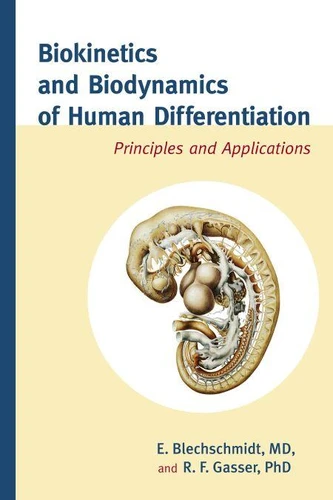
Biokinetics and Biodynamics of Human Differentiation. Principles and Applications
Par : ,Formats :
Disponible dans votre compte client Decitre ou Furet du Nord dès validation de votre commande. Le format ePub protégé est :
- Compatible avec une lecture sur My Vivlio (smartphone, tablette, ordinateur)
- Compatible avec une lecture sur liseuses Vivlio
- Pour les liseuses autres que Vivlio, vous devez utiliser le logiciel Adobe Digital Edition. Non compatible avec la lecture sur les liseuses Kindle, Remarkable et Sony
- Non compatible avec un achat hors France métropolitaine
 , qui est-ce ?
Notre partenaire de plateforme de lecture numérique où vous retrouverez l'ensemble de vos ebooks gratuitement
Pour en savoir plus sur nos ebooks, consultez notre aide en ligne ici
C'est si simple ! Lisez votre ebook avec l'app Vivlio sur votre tablette, mobile ou ordinateur :

- Nombre de pages312
- FormatePub
- ISBN978-1-58394-460-8
- EAN9781583944608
- Date de parution15/05/2012
- Protection num.Adobe DRM
- Taille16 Mo
- Infos supplémentairesepub
- ÉditeurNorth Atlantic Books
Résumé
Fifty years ago the field of human embryology was incomplete; prior to that time the anatomy of early human embryos was still unknown, and there was much to be learned about the older stages of human embryonic development. It is now understood that human organs result from step-by-step differentiations of the growing human embryo. Research by renowned embryologist Erich Blechschmidt, MD, showed that differentiations are not only the result of a gene effect, but are also brought about through growth initiated by extragenetic (occurring outside the gene) information.
Without this extragenetic information the differentiation would not begin. Dr. Blechschmidt and coauthor Raymond Gasser, PhD, maintain that Haeckel's biogenetic law (ontogeny recapitulates phylogeny) was an erroneous attempt to explain developmental processes. Blechschmidt's human embryological investigations showed that Darwin's principles (mutation and selection) are likely valid for the origin of the species, but that they cannot explain the ontogenesis of the organs.
The ontogenesis of each individual cannot be derived from phylogenetic facts. The authors stress that a clear distinction must be made between the vast field of phylogenetics and the much more exact and understandable field of ontogenetics-particularly the process of differentiation-and their goal is to present not only the abstract biokinetic principles of differentiation, but the originality of embryonic human beings as well.
Their knowledge of developmental movements leads to their conclusion that differentiation is an undivided biodynamic process that occurs during development and includes the chemical processes as well. Logically organized into two sections (the first covers early metabolic fields and includes chapters on the one-cell human ovum, the early embryo, blood vessels, the nervous system, head region, trunk, and limbs; the second describes metabolic fields in later developmental stages, distinguishing fields of corrosion, densation, contusion, distusion, retention, dilation, liquation, and detraction), Biokinetics and Biodynamics of Human Differentiation warrants reading by thoughtful professionals in a number of fields concerned with embryonic differentiation.
A new preface by Dr. Gasser addresses how the book's principles and findings were and are understood in the field of human embryology.
Without this extragenetic information the differentiation would not begin. Dr. Blechschmidt and coauthor Raymond Gasser, PhD, maintain that Haeckel's biogenetic law (ontogeny recapitulates phylogeny) was an erroneous attempt to explain developmental processes. Blechschmidt's human embryological investigations showed that Darwin's principles (mutation and selection) are likely valid for the origin of the species, but that they cannot explain the ontogenesis of the organs.
The ontogenesis of each individual cannot be derived from phylogenetic facts. The authors stress that a clear distinction must be made between the vast field of phylogenetics and the much more exact and understandable field of ontogenetics-particularly the process of differentiation-and their goal is to present not only the abstract biokinetic principles of differentiation, but the originality of embryonic human beings as well.
Their knowledge of developmental movements leads to their conclusion that differentiation is an undivided biodynamic process that occurs during development and includes the chemical processes as well. Logically organized into two sections (the first covers early metabolic fields and includes chapters on the one-cell human ovum, the early embryo, blood vessels, the nervous system, head region, trunk, and limbs; the second describes metabolic fields in later developmental stages, distinguishing fields of corrosion, densation, contusion, distusion, retention, dilation, liquation, and detraction), Biokinetics and Biodynamics of Human Differentiation warrants reading by thoughtful professionals in a number of fields concerned with embryonic differentiation.
A new preface by Dr. Gasser addresses how the book's principles and findings were and are understood in the field of human embryology.