
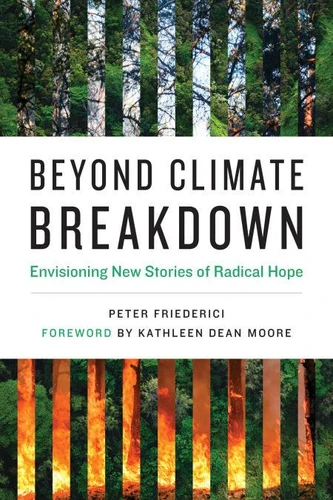
Beyond Climate Breakdown. Envisioning New Stories of Radical Hope
Par : ,Formats :
Disponible dans votre compte client Decitre ou Furet du Nord dès validation de votre commande. Le format ePub protégé est :
- Compatible avec une lecture sur My Vivlio (smartphone, tablette, ordinateur)
- Compatible avec une lecture sur liseuses Vivlio
- Pour les liseuses autres que Vivlio, vous devez utiliser le logiciel Adobe Digital Edition. Non compatible avec la lecture sur les liseuses Kindle, Remarkable et Sony
- Non compatible avec un achat hors France métropolitaine
 , qui est-ce ?
Notre partenaire de plateforme de lecture numérique où vous retrouverez l'ensemble de vos ebooks gratuitement
Pour en savoir plus sur nos ebooks, consultez notre aide en ligne ici
C'est si simple ! Lisez votre ebook avec l'app Vivlio sur votre tablette, mobile ou ordinateur :

- Nombre de pages184
- FormatePub
- ISBN978-0-262-37014-1
- EAN9780262370141
- Date de parution10/10/2023
- Protection num.Adobe DRM
- Taille1000 Ko
- Infos supplémentairesepub
- ÉditeurThe MIT Press
Résumé
The importance of telling new climate stories-stories that center the persistence of life itself, that embrace comedy and radical hope."How dare you?" asked teenage climate activist Greta Thunberg at the United Nations in 2019. How dare the world's leaders fiddle around the edges when the world is on fire? Why is society unable to grasp the enormity of climate change? In Beyond Climate Breakdown, Peter Friederici writes that the answer must come in the form of a story, and that our miscomprehension of the climate crisis comes about because we have been telling the wrong stories.
These stories are pervasive; they come from long narrative traditions, sanctioned by capitalism, Hollywood, and social media, and they revolve around a myth: that the nation exists primarily as a setting for a certain kind of economic activity. Stories are how we make sense of the world and our place in it. The story that "the economy" takes priority over everything else may seem foreordained, but, Friederici explains, actually reflect choices made by specific people out of self-interest.
So we need new stories-stories that center the persistence of life, rather than of capitalism, stories that embrace contradiction and complexity. We can create new stories based on comedy and radical hope. Comedy never says no; hope sprouts like a flower in cracked concrete. These attitudes require a new way of thinking-an adaptive attitude toward life that slips the narrow yoke of definition.
These stories are pervasive; they come from long narrative traditions, sanctioned by capitalism, Hollywood, and social media, and they revolve around a myth: that the nation exists primarily as a setting for a certain kind of economic activity. Stories are how we make sense of the world and our place in it. The story that "the economy" takes priority over everything else may seem foreordained, but, Friederici explains, actually reflect choices made by specific people out of self-interest.
So we need new stories-stories that center the persistence of life, rather than of capitalism, stories that embrace contradiction and complexity. We can create new stories based on comedy and radical hope. Comedy never says no; hope sprouts like a flower in cracked concrete. These attitudes require a new way of thinking-an adaptive attitude toward life that slips the narrow yoke of definition.