SOLDES
Jusqu'à -70% sur une sélection d'articles*

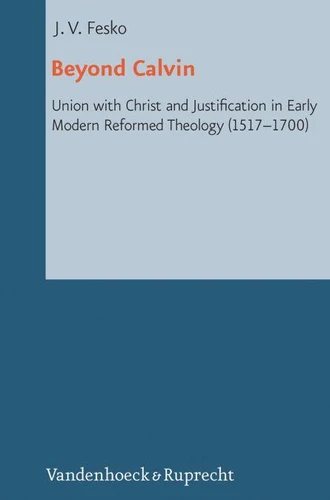
Beyond Calvin. Union with Christ and Justification in Early Modern Reformed Theology (1517-1700)
Par :Formats :
Disponible dans votre compte client Decitre ou Furet du Nord dès validation de votre commande. Le format PDF est :
- Compatible avec une lecture sur My Vivlio (smartphone, tablette, ordinateur)
- Compatible avec une lecture sur liseuses Vivlio
- Pour les liseuses autres que Vivlio, vous devez utiliser le logiciel Adobe Digital Edition. Non compatible avec la lecture sur les liseuses Kindle, Remarkable et Sony
 , qui est-ce ?
Notre partenaire de plateforme de lecture numérique où vous retrouverez l'ensemble de vos ebooks gratuitement
Pour en savoir plus sur nos ebooks, consultez notre aide en ligne ici
C'est si simple ! Lisez votre ebook avec l'app Vivlio sur votre tablette, mobile ou ordinateur :

- Nombre de pages416
- FormatPDF
- ISBN978-3-647-57022-8
- EAN9783647570228
- Date de parution13/06/2012
- Protection num.pas de protection
- Taille4 Mo
- Infos supplémentairespdf
- ÉditeurVandenhoeck & Ruprecht
Résumé
The investigation of union with Christ and justification has been dominated by the figure of John Calvin. Calvin's influence, however, has been exaggerated in our own day. Theologians within the Early Modern Reformed tradition contributed to the development of these doctrines and did not view Calvin as the normative theologian of the tradition. John V. Fesko, therefore, goes beyond Calvin and explores union with Christ and justification in the Reformation, Early Orthodox, and High Orthodox periods of the Reformed tradition and covers lesser known but equally important figures such as Juan de Valdes, Peter Martyr Vermigli, Girolamo Zanchi, William Perkins, John Owen, Francis Turretin, and Herman Witsius.
The study also covers theologians that either lie outside or transgress the Reformed tradition, such as Martin Luther, Philip Melanchthon, Faustus Socinus, Jacob Arminius, and Richard Baxter. By treating this diverse body of figures the study reveals areas of agreement and diversity on these two doctrines. The author demonstrates that among the diverse formulations, all surveyed Reformed theologians accord justification priority over sanctification within the broader rubric of union with Christ.
Fesko shows that Reformed theologians affirm both union with Christ and the golden chain of salvation, ideas that moderns find incompatible. In sum, rather than reading an individual theologian isolated from his context, this study provides a contextual reading of union with Christ and justification in the Early Modern Reformed context.
The study also covers theologians that either lie outside or transgress the Reformed tradition, such as Martin Luther, Philip Melanchthon, Faustus Socinus, Jacob Arminius, and Richard Baxter. By treating this diverse body of figures the study reveals areas of agreement and diversity on these two doctrines. The author demonstrates that among the diverse formulations, all surveyed Reformed theologians accord justification priority over sanctification within the broader rubric of union with Christ.
Fesko shows that Reformed theologians affirm both union with Christ and the golden chain of salvation, ideas that moderns find incompatible. In sum, rather than reading an individual theologian isolated from his context, this study provides a contextual reading of union with Christ and justification in the Early Modern Reformed context.