SOLDES
Jusqu'à -70% sur une sélection d'articles*

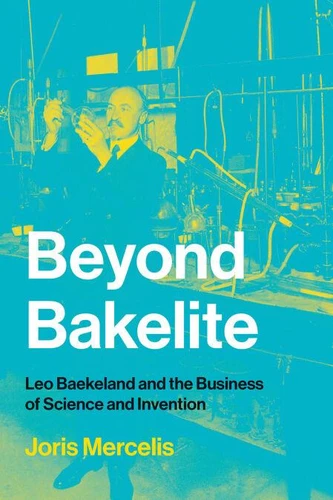
Beyond Bakelite. Leo Baekeland and the Business of Science and Invention
Par :Formats :
Disponible dans votre compte client Decitre ou Furet du Nord dès validation de votre commande. Le format ePub protégé est :
- Compatible avec une lecture sur My Vivlio (smartphone, tablette, ordinateur)
- Compatible avec une lecture sur liseuses Vivlio
- Pour les liseuses autres que Vivlio, vous devez utiliser le logiciel Adobe Digital Edition. Non compatible avec la lecture sur les liseuses Kindle, Remarkable et Sony
- Non compatible avec un achat hors France métropolitaine
 , qui est-ce ?
Notre partenaire de plateforme de lecture numérique où vous retrouverez l'ensemble de vos ebooks gratuitement
Pour en savoir plus sur nos ebooks, consultez notre aide en ligne ici
C'est si simple ! Lisez votre ebook avec l'app Vivlio sur votre tablette, mobile ou ordinateur :

- Nombre de pages378
- FormatePub
- ISBN978-0-262-35798-2
- EAN9780262357982
- Date de parution24/03/2020
- Protection num.Adobe DRM
- Taille59 Mo
- Infos supplémentairesepub
- ÉditeurThe MIT Press
Résumé
The changing relationships between science and industry in the late nineteenth and early twentieth centuries, illustrated by the career of the "father of plastics."The Belgian-born American chemist, inventor, and entrepreneur Leo Baekeland (1863-1944) is best known for his invention of the first synthetic plastic-his near-namesake Bakelite-which had applications ranging from electrical insulators to Art Deco jewelry.
Toward the end of his career, Baekeland was called the "father of plastics"-given credit for the establishment of a sector to which many other researchers, inventors, and firms inside and outside the United States had also made significant contributions. In Beyond Bakelite, Joris Mercelis examines Baekeland's career, using it as a lens through which to view the changing relationships between science and industry on both sides of the Atlantic in the late nineteenth and early twentieth centuries.
He gives special attention to the intellectual property strategies and scientific entrepreneurship of the period, making clear their relevance to contemporary concerns. Mercelis describes the growth of what he terms the "science-industry nexus" and the developing interdependence of science and industry. After examining Baekeland's emergence as a pragmatic innovator and leader in scientific circles, Mercelis analyzes Baekeland's international and domestic IP strategies and his efforts to reform the US patent system; his dual roles as scientist and industrialist; the importance of theoretical knowledge to the science-industry nexus; and the American Bakelite companies' research and development practices, technically oriented sales approach, and remuneration schemes.
Mercelis argues that the expansion and transformation of the science-industry nexus shaped the careers and legacies of Baekeland and many of his contemporaries.
Toward the end of his career, Baekeland was called the "father of plastics"-given credit for the establishment of a sector to which many other researchers, inventors, and firms inside and outside the United States had also made significant contributions. In Beyond Bakelite, Joris Mercelis examines Baekeland's career, using it as a lens through which to view the changing relationships between science and industry on both sides of the Atlantic in the late nineteenth and early twentieth centuries.
He gives special attention to the intellectual property strategies and scientific entrepreneurship of the period, making clear their relevance to contemporary concerns. Mercelis describes the growth of what he terms the "science-industry nexus" and the developing interdependence of science and industry. After examining Baekeland's emergence as a pragmatic innovator and leader in scientific circles, Mercelis analyzes Baekeland's international and domestic IP strategies and his efforts to reform the US patent system; his dual roles as scientist and industrialist; the importance of theoretical knowledge to the science-industry nexus; and the American Bakelite companies' research and development practices, technically oriented sales approach, and remuneration schemes.
Mercelis argues that the expansion and transformation of the science-industry nexus shaped the careers and legacies of Baekeland and many of his contemporaries.