
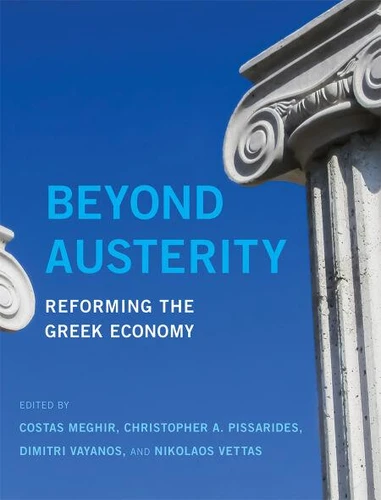
Beyond Austerity. Reforming the Greek Economy
Par : , , ,Formats :
Disponible dans votre compte client Decitre ou Furet du Nord dès validation de votre commande. Le format ePub protégé est :
- Compatible avec une lecture sur My Vivlio (smartphone, tablette, ordinateur)
- Compatible avec une lecture sur liseuses Vivlio
- Pour les liseuses autres que Vivlio, vous devez utiliser le logiciel Adobe Digital Edition. Non compatible avec la lecture sur les liseuses Kindle, Remarkable et Sony
- Non compatible avec un achat hors France métropolitaine
 , qui est-ce ?
Notre partenaire de plateforme de lecture numérique où vous retrouverez l'ensemble de vos ebooks gratuitement
Pour en savoir plus sur nos ebooks, consultez notre aide en ligne ici
C'est si simple ! Lisez votre ebook avec l'app Vivlio sur votre tablette, mobile ou ordinateur :

- Nombre de pages728
- FormatePub
- ISBN978-0-262-33922-3
- EAN9780262339223
- Date de parution13/10/2017
- Protection num.Adobe DRM
- Taille15 Mo
- Infos supplémentairesepub
- ÉditeurThe MIT Press
Résumé
Prominent economists present detailed analyses of the conditions that made Greece vulnerable to economic crisis and offer policy recommendations for comprehensive and radical change. More than eight years after the global financial crisis began, the economy of Greece shows little sign of recovery, and its position in the eurozone seems tenuous. Between 2008 and 2014, incomes in Greece shrank by more than 25 percent, homes lost more than a third of their value, and the unemployment rate reached 27 percent.
Most articles on Greece in the media focus on the effects of austerity, repayment of its debt, and its future in the eurozone. In Beyond Austerity: Reforming the Greek Economy, leading Greek economists from institutions both within and outside Greece, take a broader and deeper view of the Greek crisis, examining the pathologies that made Greece vulnerable to the crisis and the implications for the entire eurozone.
Each chapter takes on a specific policy area, examining it in terms of Greece's economic reality and offering possible directions for policy. The topics range from macroeconomic issues to markets and their regulation to finance to the public sector. Individual chapters address the costs and benefits of participation in the eurozone, Greece's international competitiveness, taxation, pensions, the labor market, privatization, product markets, finance, education, healthcare, corruption, the justice system, and public administration.
The contributors argue that Greek institutions require a deep overhaul rather than quick fixes to enable long-term growth and prosperity.
Most articles on Greece in the media focus on the effects of austerity, repayment of its debt, and its future in the eurozone. In Beyond Austerity: Reforming the Greek Economy, leading Greek economists from institutions both within and outside Greece, take a broader and deeper view of the Greek crisis, examining the pathologies that made Greece vulnerable to the crisis and the implications for the entire eurozone.
Each chapter takes on a specific policy area, examining it in terms of Greece's economic reality and offering possible directions for policy. The topics range from macroeconomic issues to markets and their regulation to finance to the public sector. Individual chapters address the costs and benefits of participation in the eurozone, Greece's international competitiveness, taxation, pensions, the labor market, privatization, product markets, finance, education, healthcare, corruption, the justice system, and public administration.
The contributors argue that Greek institutions require a deep overhaul rather than quick fixes to enable long-term growth and prosperity.