SOLDES
Jusqu'à -70% sur une sélection d'articles*

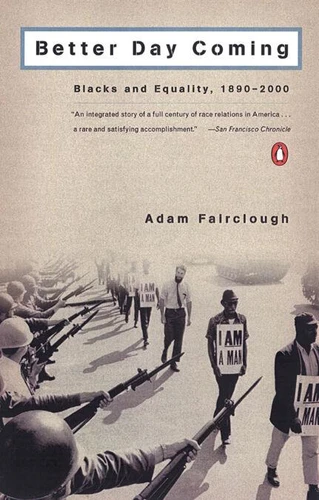
Better Day Coming. Blacks and Equality, 1890-2000
Par :Formats :
Disponible dans votre compte client Decitre ou Furet du Nord dès validation de votre commande. Le format ePub protégé est :
- Compatible avec une lecture sur My Vivlio (smartphone, tablette, ordinateur)
- Compatible avec une lecture sur liseuses Vivlio
- Pour les liseuses autres que Vivlio, vous devez utiliser le logiciel Adobe Digital Edition. Non compatible avec la lecture sur les liseuses Kindle, Remarkable et Sony
- Non compatible avec un achat hors France métropolitaine
 , qui est-ce ?
Notre partenaire de plateforme de lecture numérique où vous retrouverez l'ensemble de vos ebooks gratuitement
Pour en savoir plus sur nos ebooks, consultez notre aide en ligne ici
C'est si simple ! Lisez votre ebook avec l'app Vivlio sur votre tablette, mobile ou ordinateur :

- Nombre de pages400
- FormatePub
- ISBN1-4406-8416-2
- EAN9781440684166
- Date de parution25/06/2002
- Protection num.Adobe DRM
- Taille2 Mo
- Infos supplémentairesepub
- ÉditeurPenguin Books
Résumé
From the end of postwar Reconstruction in the South to an analysis of the rise and fall of Black Power, acclaimed historian Adam Fairclough presents a straightforward synthesis of the century-long struggle of black Americans to achieve civil rights and equality in the United States. Beginning with Ida B. Wells and the campaign against lynching in the 1890s, Fairclough chronicles the tradition of protest that led to the formation of the NAACP, Booker T.
Washington and the strategy of accommodation, Marcus Garvey and the push for black nationalism, through to Martin Luther King, Jr., and the Civil Rights Movement of the 1960s and beyond. Throughout, Fairclough presents a judicious interpretation of historical events that balances the achievements of the Civil Rights Movement against the persistence of racial and economic inequalities.
Washington and the strategy of accommodation, Marcus Garvey and the push for black nationalism, through to Martin Luther King, Jr., and the Civil Rights Movement of the 1960s and beyond. Throughout, Fairclough presents a judicious interpretation of historical events that balances the achievements of the Civil Rights Movement against the persistence of racial and economic inequalities.