
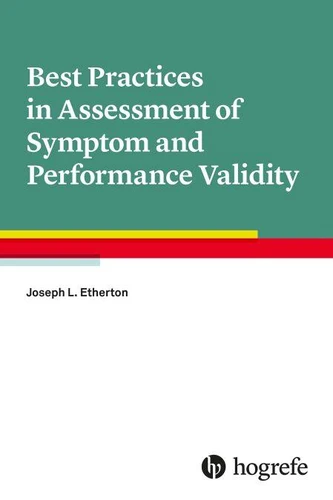
Best Practices in Assessment of Symptom and Performance Validity
Par :Formats :
Disponible dans votre compte client Decitre ou Furet du Nord dès validation de votre commande. Le format ePub est :
- Compatible avec une lecture sur My Vivlio (smartphone, tablette, ordinateur)
- Compatible avec une lecture sur liseuses Vivlio
- Pour les liseuses autres que Vivlio, vous devez utiliser le logiciel Adobe Digital Edition. Non compatible avec la lecture sur les liseuses Kindle, Remarkable et Sony
 , qui est-ce ?
Notre partenaire de plateforme de lecture numérique où vous retrouverez l'ensemble de vos ebooks gratuitement
Pour en savoir plus sur nos ebooks, consultez notre aide en ligne ici
C'est si simple ! Lisez votre ebook avec l'app Vivlio sur votre tablette, mobile ou ordinateur :

- Nombre de pages104
- FormatePub
- ISBN978-1-61334-670-9
- EAN9781613346709
- Date de parution29/06/2026
- Protection num.Digital Watermarking
- Taille3 Mo
- Infos supplémentairesepub
- ÉditeurHogrefe Publishing
Résumé
Psychologists evaluating patients who may have psychological or neuropsychological impairment integrate data from clinical
interviews, record reviews, and other sources to determine the presence and degree of impairment. An essential part of this process is assessing whether the patient is providing an accurate representation of their psychological or cognitive status on selfreport or neuropsychological measures.
This book explores the conceptual underpinnings and empirical studies supporting the use of symptom and performance validity measures in psychological assessment. It provides a practical framework for integrating validity test results with other clinical data, helping clinicians distinguish between nonintentional forms of disability exaggeration (e.g., somatization) from intentional overreporting (e.g., malingering).
Designed for psychologists, neuropsychologists, and trainees, this book offers practical guidance for incorporating validity assessment into routine practice and to interpret assessment data with confidence and scientific rigor.
This book explores the conceptual underpinnings and empirical studies supporting the use of symptom and performance validity measures in psychological assessment. It provides a practical framework for integrating validity test results with other clinical data, helping clinicians distinguish between nonintentional forms of disability exaggeration (e.g., somatization) from intentional overreporting (e.g., malingering).
Designed for psychologists, neuropsychologists, and trainees, this book offers practical guidance for incorporating validity assessment into routine practice and to interpret assessment data with confidence and scientific rigor.