
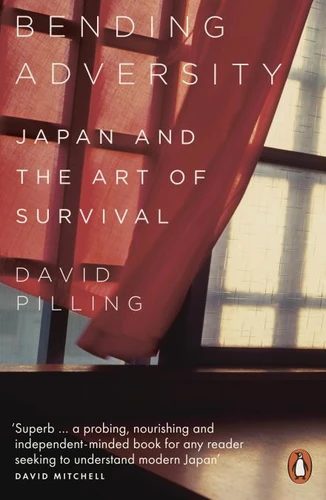
Bending Adversity. Japan and the Art of Survival
Par :Formats :
Disponible dans votre compte client Decitre ou Furet du Nord dès validation de votre commande. Le format ePub protégé est :
- Compatible avec une lecture sur My Vivlio (smartphone, tablette, ordinateur)
- Compatible avec une lecture sur liseuses Vivlio
- Pour les liseuses autres que Vivlio, vous devez utiliser le logiciel Adobe Digital Edition. Non compatible avec la lecture sur les liseuses Kindle, Remarkable et Sony
- Non compatible avec un achat hors France métropolitaine
 , qui est-ce ?
Notre partenaire de plateforme de lecture numérique où vous retrouverez l'ensemble de vos ebooks gratuitement
Pour en savoir plus sur nos ebooks, consultez notre aide en ligne ici
C'est si simple ! Lisez votre ebook avec l'app Vivlio sur votre tablette, mobile ou ordinateur :

- Nombre de pages368
- FormatePub
- ISBN978-1-84614-547-6
- EAN9781846145476
- Date de parution02/01/2014
- Protection num.Adobe DRM
- Infos supplémentairesepub
- ÉditeurPenguin
Résumé
A pacy, fresh and surprising portrait of Japan and the Japanese - from David Pilling, award-winning writer and Asia Editor of the Financial TimesDespite years of stagnation, Japan remains one of the world's largest economies and a country which exerts a remarkable cultural fascination. David Pilling's new book is an entertaining, deeply knowledgeable and surprising analysis of a group of islands which have shown great resilience, both in the face of financial distress and when confronted with the overwhelming disaster of the 2011 earthquake.
The resulting tsunami, which killed some 19, 000 people, and nuclear catastrophe highlighted both the deeply impressive practical resilience of ordinary Japanese and a political culture of extraordinary carelessness and arrogance. Pilling describes the emergency and its aftermath, but then writes far more broadly about many aspects of Japan which are little known to outsiders and which do so much to explain these contradictory responses to the earthquake.
Bending Adversity is a superb work of reportage and the essential book even for those who already feel they know the country well.
The resulting tsunami, which killed some 19, 000 people, and nuclear catastrophe highlighted both the deeply impressive practical resilience of ordinary Japanese and a political culture of extraordinary carelessness and arrogance. Pilling describes the emergency and its aftermath, but then writes far more broadly about many aspects of Japan which are little known to outsiders and which do so much to explain these contradictory responses to the earthquake.
Bending Adversity is a superb work of reportage and the essential book even for those who already feel they know the country well.
