
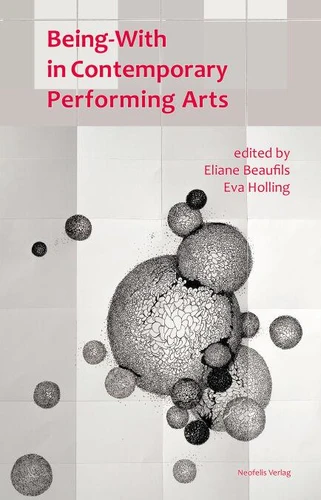
Being-With in Contemporary Performing Arts
Par : , , , ,Formats :
Disponible dans votre compte client Decitre ou Furet du Nord dès validation de votre commande. Le format PDF est :
- Compatible avec une lecture sur My Vivlio (smartphone, tablette, ordinateur)
- Compatible avec une lecture sur liseuses Vivlio
- Pour les liseuses autres que Vivlio, vous devez utiliser le logiciel Adobe Digital Edition. Non compatible avec la lecture sur les liseuses Kindle, Remarkable et Sony
 , qui est-ce ?
Notre partenaire de plateforme de lecture numérique où vous retrouverez l'ensemble de vos ebooks gratuitement
Pour en savoir plus sur nos ebooks, consultez notre aide en ligne ici
C'est si simple ! Lisez votre ebook avec l'app Vivlio sur votre tablette, mobile ou ordinateur :

- Nombre de pages272
- FormatPDF
- ISBN978-3-95808-204-5
- EAN9783958082045
- Date de parution01/11/2018
- Protection num.Digital Watermarking
- Taille9 Mo
- Infos supplémentairespdf
- ÉditeurNeofelis Verlag
Résumé
The concept of being-with developed by the philosopher Jean-Luc Nancy asks a fundamental question about human life, inasmuch as we have always been and will be co-existent with people and environments. All modes of sense-making and subjectivation, but also presence, can only occur within a context and through interaction. This is why historical forms of theater have frequently been viewed as sites of communality and why critical approaches have questioned concepts such as 'sense', 'meaning' and 'habitus'.
Like literature, theater has also inherited the scene of myth: It satisfies our need for narration, interpretation and to share in something. In turn, the joint creation of meaning in scenic practices is also part of the traditional idealization of the theater - but is this ideal purely mythical? The authors of this book investigate and explore how meaning is being questioned or liberated in contemporary performances, and how individual thinking/action can be articulated to others, paving the way for other gestures, theatrical processes of recognition and the performative sharing process (of sense-making).
Like literature, theater has also inherited the scene of myth: It satisfies our need for narration, interpretation and to share in something. In turn, the joint creation of meaning in scenic practices is also part of the traditional idealization of the theater - but is this ideal purely mythical? The authors of this book investigate and explore how meaning is being questioned or liberated in contemporary performances, and how individual thinking/action can be articulated to others, paving the way for other gestures, theatrical processes of recognition and the performative sharing process (of sense-making).